When it comes to buying books, I’m either very keen and go straight for the new hardback edition, or I’ll trawl the bargain basements for unwanted and long forgotten editions selling at three for a fiver. I’ve just finished one of the latter, and can belatedly vouch that Heather Pringle’s Mummy Congress is the most interesting, original, and frankly amusing treatises on preserved corpses you’ll find.
Maybe it’s old news (Mummy Congress was published in 2001), but it’s ghoulishly intriguing to learn that mummies have until quite recently been used to make paint for artists. Human flesh and bone, combined with the resinous embalming materials of the time, make all the difference in achieving the silky texture only Mummy can deliver. Available into the early years of the twentieth century, the paint left the market when the supply of mummies dried up.
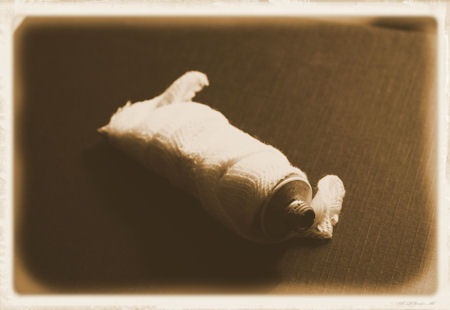
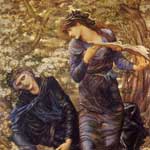
Further research convinces me that despite the horrified reaction of artists such as Lawrence Alma-Tadema and Edward Burne-Jones, on discovering the true nature of what they had happily been throwing at the canvas for years (Burne-Jones even gave his tube of Mummy a decent burial in the back garden), our national galleries must be displaying a fair selection of canvases and boards that are essentially smeared with dead people.
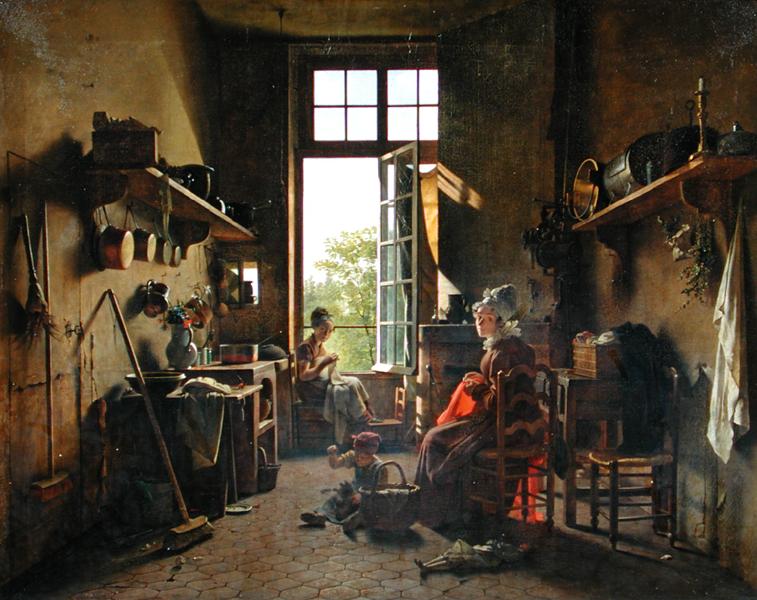
According to Pringle’s sources, Martin Drolling’s L’interieur d’une cuisine, now in the Louvre, is a prime candidate, although in this case the mummies were of more recent French origin. But what about Burne-Jones? His pictures do have that atmospheric brownish aura about them.
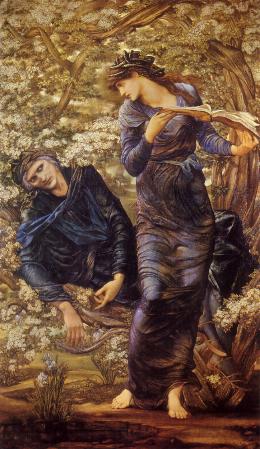
Science, in the form of mass spectroscopy, can help identify ‘mummy’ paintings. The molecules associated with bitumen, asphalt, and human remains all have their tell-tale signature. Yet the technique hasn’t been widely used, probably due to the disincentive of an invasive procedure, the results of which can only turn people off.
If anyone knows more about this fascinating topic please get in touch.
Speaking of preserved corpses, I’ve been meaning to read Stiff: The Curious Lives of Human Cadavers ever since it appeared on a “best of science books” list that floated around a while back. I already have a pretty massive reading backlog though, so I doubt I’ll be getting to it for a while…
Yeh, burn ’em, bury ’em, paint with ’em, eat ’em. Dead folks are a bag o’ laughs.
Nice to know you can be useful after you’re dead.
Well, if you´re still interested in the subject, you should read the article “Body colour: The Misuse of Mummy ” by Sally Woodcock. It´s published in The Conservator magazine, number 20/1996.
Also a book by Victoria Finlay: Colour: Travels Through The Paint Box mentions mummy brown amongst other fascinating pigments!
Thank you U-S,
Yes, I stumbled across various references and citations to Body Colour when I wrote the piece, but couldn’t get (free!) access to it anywhere.
Victoria Finlay’s book sounds interesting. My wife and I both paint, so pigments are often in our thoughts.
I’m wondering now what the most unusual source for a pigment is today? Guess I need to buy the book 🙂