Reminder – David Attenborough on Darwin, Sunday BBC1 9pm. Here is Nature’s trailer.
According to the Radio Times, Attenborough gets hate mail from creationists over his views.
DA says:
“They always mean beautiful things like hummingbirds. I always reply by saying that I think of a little child in east Africa with a worm burrowing through his eyeball. The worm cannot live in any other way, except by burrowing through eyeballs. I find that hard to reconcile with the notion of a divine and benevolent creator.”
I keep running into this demonstration of how strange our brains can be, so thought I’d have a go myself.
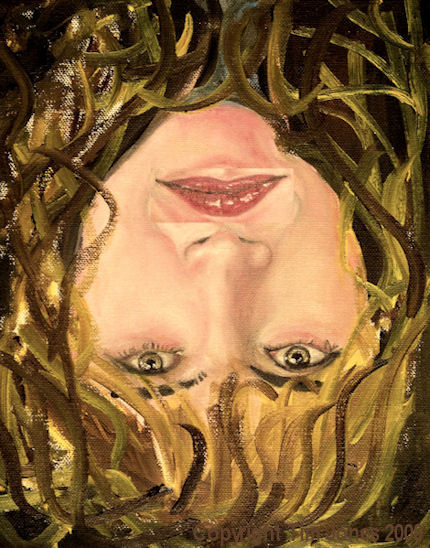
Have a look at the inverted face below. Upside down, but still pretty cute eh?
Cute
Now look at the next picture where she’s turned the right way round – yuk!
But it’s exactly the same picture just inverted. Our brains somehow pick out the individual elements of the face and reconstruct them as we normally expect to see them – I guess? Personally, I can’t see a glum person in the top picture without turning my head to a degree – I’ve just discovered – not so good for my neck.
Not so cute. Well, not so happy anyhow.
This simple example was made by cutting, rotating, and pasting the mouth of the girl in the painting.
I saw something like this a couple of years back at the Exploratorium Science Centre in San Francisco. The most recent demonstration I’ve seen was at the Weird Science event here in London earlier this month, where Richard Wiseman had us all in hysterics with a doctored picture of Margaret Thatcher. That was doubly strange, as: (a) he’d turned the eyes round as well (which is the correct thing to do, but my painting struggles because of the hair) and, (b) rotated the image slowly, which revealed there is a certain point where the brain clicks over to seeing the ‘new’ image – the gestalt switch moment.
The Exploratorium exhibition also included so-called hybrid images of faces that change expression depending on how near or far you stand from them. The effect still works very well on a computer screen, but you need to stand a long way back.
Not entirely sure how the brain processes compare for the two types of phenomena, but I find the ‘switch’ is more gradual with the hybrid images. In deference to copyright I’ll not share the snaps I took, but you can find something very similar at the ‘Hybrid Images’ website owned by Dr.Aude Olivia, Dept. of Brain and Cognitive Sciences at MIT.
See Sophie smile and scowl and smile and scowl and smile
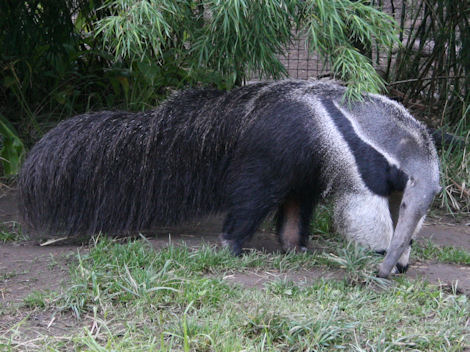
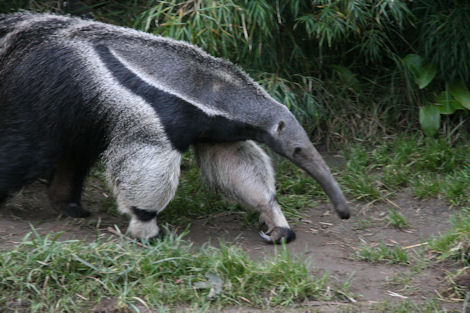
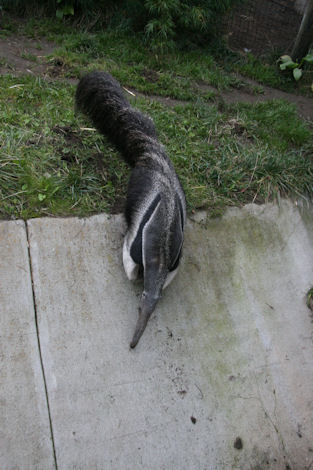
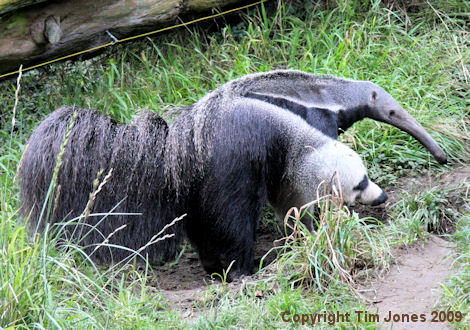
What’s all this then? A protective alliance of anteaters and pandas? Or are they just good mates out for a stroll?
All mixed up
Neither. Take a closer look and you’ll see it’s all one animal. What’s more, pandas come from China and anteaters are from Central and South Amercia, so there’s no way they could have fixed up a stunt like this – through evolutionary synergies or otherwise. Unless you know different?
Just to complicate matters further, I took the photo in a North American zoo.
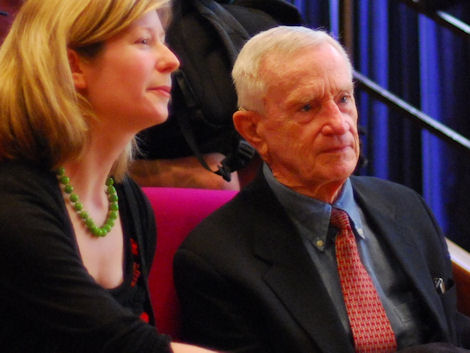
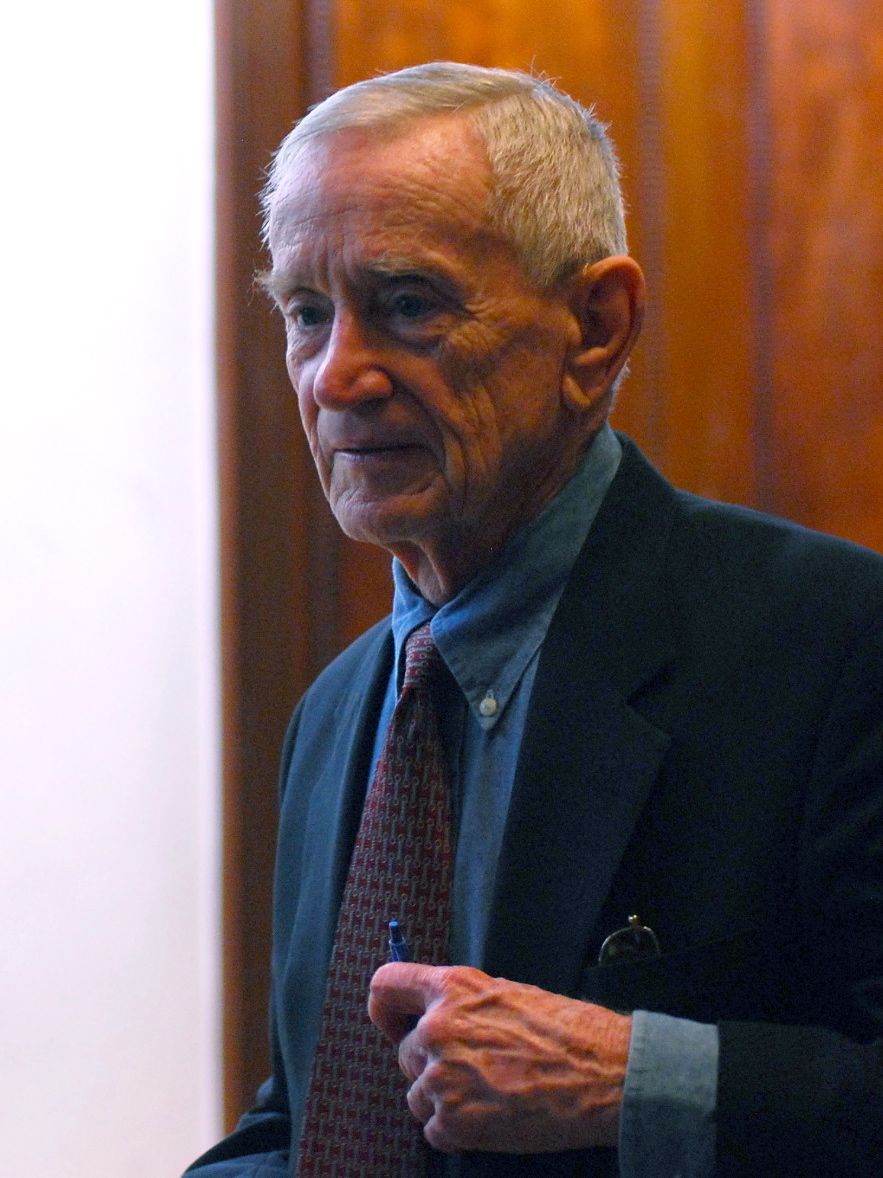
Run over from behind by a bus. That’s how physicist and skeptic Professor Robert Park wants to go when his time is up.
Professor Robert 'Bob' Park and Jo Marchant, NewScientist at the Royal Institution this evening (Photo Sven Klinge)
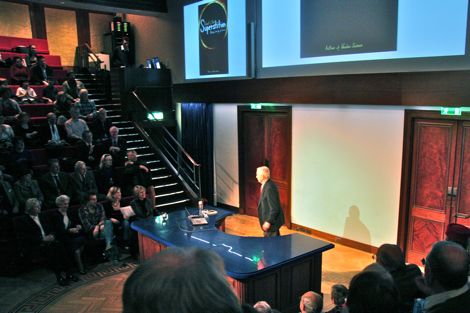
I joined Bob Park at the Royal Institution this evening to hear him talk about his new book – ‘Superstition: belief in the age of science’.
To be candid, I’m not sure we got much of an insight into the book, and with a good showing of the ‘usual suspects’ (purely based on my memory of familiar faces – National Secular Society, British Humanist Association, Brights, and atheists of other flavours no doubt – not to mention scientists) in the audience, this was pretty much preaching to the converted. But it didn’t matter; Bob came across as a great guy – gentle and sharp at the same time; but most of all – human.
Bob Park at the Royal Institution (Photo: Tim Jones)
Following an introduction by Jo Marchant from New Scientist, Bob launched straight into the tale of how two catholic priests had given him the last rites, having stumbled across him, unconscious, under a fallen giant oak. He had photographs to prove it, and that pretty much set the tone for the evening.
We, Bob explained, as homo-sapiens, had only been around for 35,000 years when he was a lad; but today we were 160,000 years old. How come? There’s just more evidence today – we have the 160k skull. And as we’ve only been civilised (read post-hunter/gatherer) for 10,000 years of that, it’s fair to say our brains aren’t exactly wired to watch TV, never mind cancel the irritating offer of a wi-fi connection that repeatedly popped up throughout Bob’s PC presentation. Yet despite our brains being rigged to escape tigers and seek out elusive berry bushes, those same brains do a pretty good job of enjoying concertos, fine art, and solving complex differential equations. So we are somehow managing to get along with less than fit-for-purpose equipment. The secret now is to understand it (the brain) sufficiently so that we can explain and counter some of its more noisome excesses – like war for example.
Bob Park (Photo courtesy Sven Klinge)
But getting on to superstition now, Bob explained that as early as 585 BC, Thales of Melitus had understood how solar eclipses came about, if not how to predict them. And yet armed with this and doubtless many other supportive evidences for causation, we failed to declare the rational age of man, but rather continued, as we still do, to be superstitious.
Religion is a superstition, Bob maintained. And with 90% of the global population subscribing to some form of religion, doesn’t that make most of us superstitious? In Bob’s reckoning, that should be a concern.
There followed a variety of God-Delusionesque arguments around the illogical multiplicity of christian and other religions, what I thought was a somewhat confused description and use of the anthropic principle, and a potted history of John Templeton and the Templeton prize. The prize is given to individuals who do research that advances ‘spiritual discovery’ – and is big bucks; the last one was £820,000 to Michael Heller – a cosmologist and catholic priest. We learnt that Templeton’s only dictate on value of the prize was that it should always exceed whatever Nobel is offering. Bob shared the results of a Templeton funded study that must be seen as an own goal in some quarters: a controlled trial to assess the value of prayer on the recovery rates of coronary bypass patients. No effect was found. Interestingly, there was a negative impact on the health of a sub-group of patients who were told up-front they would be receiving prayers.
We moved on to a debunking of the ten commandments as the basis for our moral code, and an appeal instead to the Golden Rule of ‘do unto others as you would have them do unto you’ , which Bob put down to sensible evolutionary development rather than any biblical dictate. (As it happens, A.C.Grayling challenged the attractiveness of the Golden Rule earlier this week – but that’s another story….).
On the role of science, Bob believes that if there is one thing science has to offer over everything else, it’s openness – a reference to open data sharing and peer review.
So what are we left with? A questioner from the audience asked what we all wonder now and again – ‘does life have any meaning?’
But Bob had already answered the question in his slides. There is no plan, and if there’s no plan, there’s no purpose beyond that we give to life ourselves. But, as Bob continued, “that doesn’t mean that we can’t have good lives, enjoyable lives, and part of doing that is the way we treat other people”. There’s nothing more to say.
Also of Interest
Professor Robert Park interview at the Guardian HERE
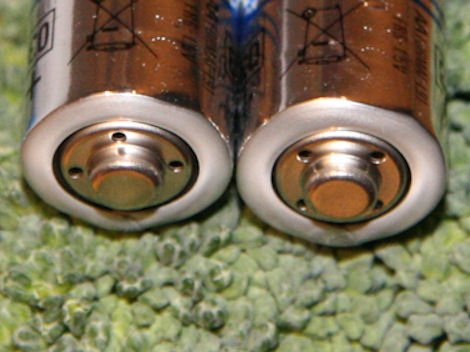
Increasing demand for electric vehicles and portable electronic devices is driving a parallel need for environmentally friendly batteries.
A greener future in store?
But combining improved performance with safe, eco-efficient, operation is a tall order.Michel Armand and his team from the Universite de Picardie Jules Verne in France showed that a sustainably sourced organic version of the ubiquitous lithium-ion battery could provide the answer (Nature Materials, DOI:10.1038/NMAT2372).
Armand’s battery, built around a novel lithium-hydrocarbon anode, delivers up to three times the typical minimum energy capacity needed for practical applications but is environmentally friendly too.
The organic acids used to make the electrode are readily synthesised on a sustainable basis from abundant recycled plastics.They also appear as a metabolic by-product when bio-organisms act on common hydrocarbons like benzene.
The team say their device generates less heat and is more thermally stable compared with conventional Li-ion batteries with titanium or pure carbon electrodes.That makes it an attractive option for hybrid vehicles, where the presence of petroleum fuels alongside electricity makes battery meltdown unthinkable; we glimpsed the consequences of thermal instability in 2006, when a manufacturing defect in Sony laptop batteries caused some devices to burst into flame.
Lithium-ion batteries must not show memory effect, so they retain their capacity when recharged from a partly charged condition.In the tests, performance of the organic battery dropped off only slowly during repeated recharge cycles, indicating a desirable reversibility of the chemistry. Before-and-after-charge x-ray diffraction measurements confirmed the structural stability of the electrode.
The team also say their device is lighter, the novel chemistry allowing replacement of heavier copper components with aluminium ones elsewhere in the battery.That makes all the difference in an electric vehicle where every gram counts.
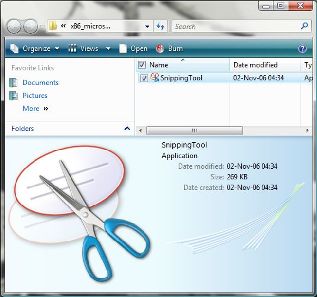
Having taken that fateful decision 18 months ago to select a PC with the Vista operating system – along with how ever many other fools, I realised tonight where the value in Vista really lies. It’s the snipping tool. Nothing else, just the snipping tool.
Snip
For the unenlightenend, the snipping tool lets you, at the click of a mouse, encircle (well, enrectangle) ANYTHING on the screen at any time and save it as a JPEG. From there on, the captured item is all yours to do with as you please. Heaven.
Ironically, in creating this post, I discovered the snip tool’s hidden weakness…….it can’t snip itself ! No way to capture the snip icon in action. Hence the image here lifted from the ether; from exactly where I neither know nor care.
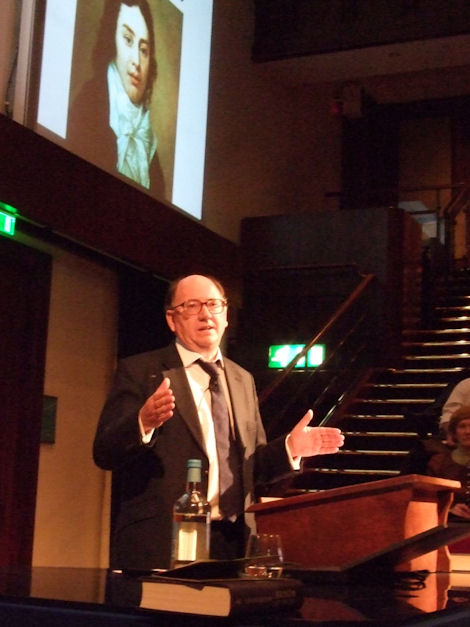
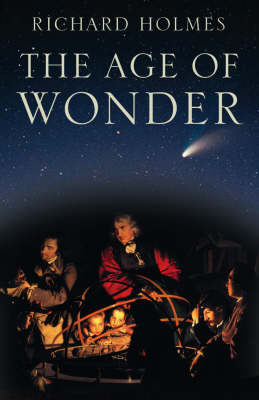
Yesterday evening at the Royal Institution, I watched the respected biographer and academic Richard Holmes make an empassioned plea for an end to the ‘two cultures’ rift between science and the arts – a reference to the term coined by CP Snow in his Rede Lecture of 1959.
Coleridge with his biographer, Richard Holmes, at the RI last night. (Photo Sven Klinge)
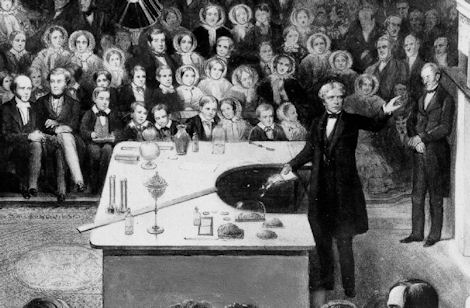
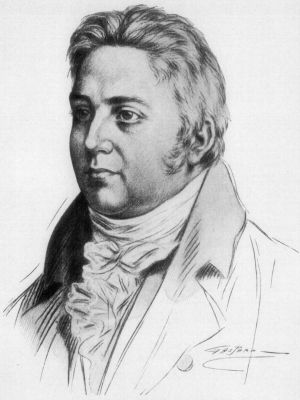
In a packed auditorium, familiar as the venue for the annual Christmas Lectures, Holmes challenged his hosts to do their bit by including humanities speakers as a fixture in the RI lecture programme. He certainly held the historical high ground, sharing a daiz occupied in another age by Sir Humphrey Davey, Michael Faraday and significantly the poet Samuel Coleridge.
Faraday at the Royal Institution
Dipping into his new book The Age of Wonder, Holmes used the lives and achievements of explorers like Sir Joseph Banks and the romantic polymath Erasmus Darwin (grandfather to Charles) to illustrate an age when science and art moved together to their mutual benefit. He continued through the lives of the Herschels: from William and Catherine and the discovery of Uranus, to Catherine’s formative influence on the young John Herschel. Then on to Humphrey Davy and Michael Faraday, finishing with Charles Darwin in the mid-nineteenth century. Readers who enjoyed hearing about Joseph Banks’s culturally sensitive integration activities in this earlier post on the Otaheite Dog, will find more revelations in the same vein in Age of Wonder.
Samuel Taylor Coleridge
Holmes bemoaned the lack of general access to source texts, including Banks’s Endeavour Journal and Darwin’s Botanic Garden – another sign of the literary/science imbalance of two cultures thinking. Both of these works are wonderful pieces of literature as well as scientific documents. The Botanic garden is a compendium of virtually all 18th century science expressed as poetry, in a format where the footnotes are as inspiring as the main text. The good news is that both are available online.
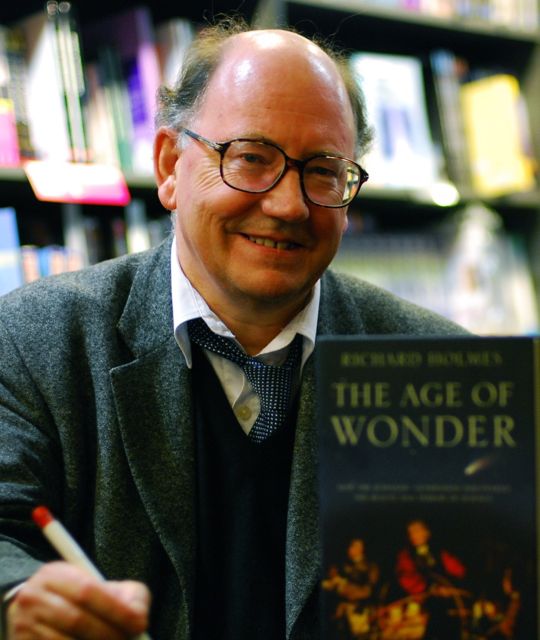
Richard Holmes (Photo courtesy Sven Klinge)Age of Wonder
Holmes believes that if there there was one event more than any other that influenced Snow’s proclamation on the two cultures, it was the horrific association of science with the atomic bomb. An audience member blamed the divide in the UK on the arts/science choices students were forced to make at A-Level. Whatever the reason, Holmes’s comments are a timely introduction to a week in which the two cultures theme figures large, with as part of the London Consortium’s Art and Science Now Programme, a mix of all-day conference sessions and receptions scheduled at the Wellcome Institute on Thursday, the Science Museums’s Dana Centre on Friday, and the Tate Modern Art Gallery on Saturday. More on those later.
UPDATE: My report on the Art and Science Now ‘Two Cultures’ event is HERE
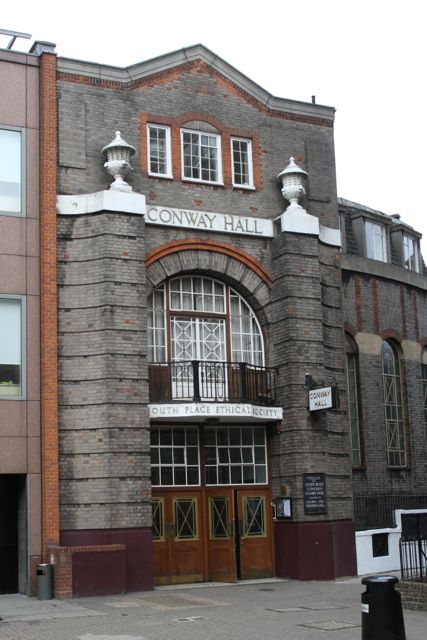
Contrary to popular belief, dogs are in fact spies from Venus. So maintained University of London philosopher Steven Law at today’s Centre for Inquiry London ‘Weird Science’ event at Conway Hall.
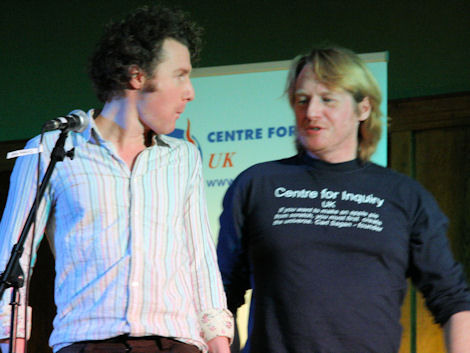
Ben Goldacre (left) and Stephen Law at ‘Weird Science’ today. Photo:Tim Jones
In doing so, he applied the same faultless logic and interpretation of evidence used by young earth creationists, defending their belief that the universe is only 6000 years old. Say no more. And that was pretty much the tone for a day of talks on the science of the weird, wacky, and flaky variety, from Ben Goldacre (”Bad Science” in the Guardian), Professors of anomolous psychology Richard Wiseman and Chris French, and philosopher Stephen Law.
Conway Hall (Photo:Tim Jones)
Before sharing what a great show this was, let me digress for a bit on CFI London itself. CFI London are at pains to explain in their FAQ that they don’t see science and reason as the be all and end all, but their positioning, and the topics they choose to discuss, for me at least force the issue of the incompatibility of science and religion. Once you engage in a discussion on human psychology and the concept of what it means to be rational, the polite separation of science and religion becomes difficult to maintain. It will be interesting to see how CFI’s event programme and various potential allegiances with secular interests develop.
Anyhow – it was a great show. Richard Wiseman, hotfoot from an evening debunking mediums with his mate Derren Brown, illustrated how easily our perceptions can be fooled and our attention directed. Familiar gestalt switch examples, like the rabbit-duck picture, made an appearance, along with excerpts from Richard’s various TV appearances, including a hilarious debunking of firewalkers, and these clips: the amazing floating cork, and the colour changing card trick.
You might remember Chris French, a psychology professor from Goldsmiths, as the guy who organised the dowsing trials on Richard Dawkins’ ‘Enemies of Reason’ TV show. French re-lived with us that demonstration of the refractoriness of dowsers’ belief in the face of out and out debunking, and shared the results of a study that aligned personality traits with the likelihood of belief in conspiracy theories. Those more prone to belief tend to (a) have low trust in people, (b) feel alienated from society, (c) are quick to make assumptions from partial evidence.
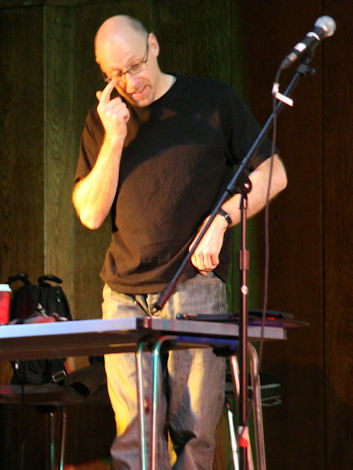
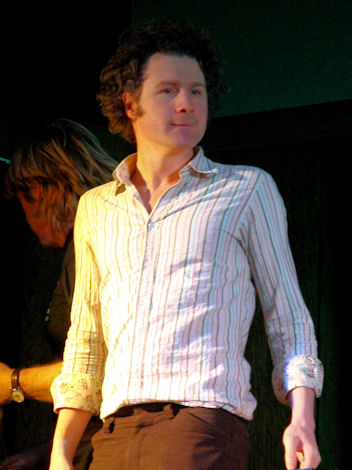
Richard Wiseman at ‘Weird Science’ today. Photo:Tim Jones
Writer, broadcaster, and medical doctor Ben Goldacre, while outspoken and opinionated, sticks to subject areas he knows something about. That’s why he doesn’t address environmental issues and such like in his column and blog; their complexity not lending itself to case-based, winnable on evidence, 650 word analyses.
Ben shared his trademark disgust at alternative medicine and quackery, but majored on the rise and demise of medicine – through the Golden Age from the 30’s to the 70’s – after which the low hanging fruit dried up and major breakthroughs fizzled out. His point – we should all get real that our level of understanding of much desease and suffering is still pretty minimal and (my words) – shit happens. Although Ben’s book ‘Bad Science’ is still hot off the presses, his words reminded me of another honest text with a medical flavour – ‘The Rise and Fall of Modern Medicine’ by doctor and Telegraph columnist James Le Fanu; check it out.
Ben Goldacre at ‘Weird Science’ today. Photo:Tim Jones
Mainstream newspapers, and particularly their ‘humanities graduate’ editors (I’m sure he’s not talking about scientifically trained SciComs Grads here) got it in the neck big time, as did the various PR and press agencies that feed them. Why, when literary criticism of the highest intellectual level gets column space, do we not see science coverage of the same professional calibre? Goldacre also, admirably, subscribes to the BBC Horizon dumb down theory. (There are still Horizon dumb down deniers out there – believe it or not.)
Ben’s closing comments were encouraging – but not for mainstream conventional print journalism. He saw no solution to the dire journalistic picture he’d painted – it’s simply what the market wants. But the rise of the blog is changing everything, cutting out a middle man who is adding less and less value. And if we doubt a blog’s content? – check the source references; all good blogs provide the links.
I wasn’t very environmentally friendly over the Christmas holidays.
A CO2 emission of 2.1 tonnes, my share of a return flight to the US, represented about a quarter of the average UK person’s total yearly emission of 9 tonnes.
Mostly harmless?
I used this fact recently as a topical lead-in for another article, adding that I once flew light aircraft as a hobby (=double criminal for sure). But that presumption stuck in my head and prompted some research into the impact those little private planes really have in the big picture of global warming.
‘General Aviation’ is the name used in its broadest sense to include all non-scheduled corporate aviation plus private and sport aviation. Take out the corporate jets, and we’re left with the ‘Piston GA’ category of the sort covered by my license, and including familiar planes like the four seat Cessna 172.
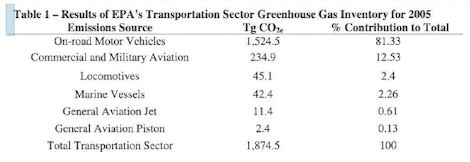
USA emissions data fell most readily out of Google, with the Aircraft Owners and Pilots Association (AOPA) pointing to EPA data showing GA’s contribution of less than 1% of all US GHG emissions from the transport sector, and Piston GA only 0.13%. They argue that this is small potatoes compared to other sources more worthy of the regulator’s attention (see table) .
Table from the AOPA showing 2005 EPA data
So that’s 2.4 million tonnes of CO2 from relatively small piston engined aircraft (a Tg or tera gram is one million metric tons, or tonnes) . FAA data on the number of private licenses suggests this emission is associated with 200,000, of the 600,000 or so total pilots in the US.
In the UK, there are far fewer private pilots overall (around 35,000 license holders), and Piston GA in particular has a much smaller role in the economy.
We can estimate C02 from an assumed fuel consumption for the Cessna 172 of 8.6 US gallons per hour, producing 2.3kg CO2 per litre, equating to 75kg CO2 per hour. Estimating the average recreational pilot is flying less than 50 hours a year equates to 3.7 tonnes CO2, which for 35,000 licensed UK pilots is 130,000 tonnes CO2.
Having a low relative impact is not an excuse to do nothing in this case. Two efforts to reduce emissions further are exemplified by the Carbon Neutral Plane Programme, which arranges for aircraft owners to offset their aircraft’s emission through financial support of CO2 reduction projects, and technology incentives like the Green Prize competition run by CAFE and reported here. Technical innovations include engine modifications within existing airframes, such as the introduction of Full Authority Digitial Engine Control (FADEC) – for 15% fuel savings, the substitution of a single, high-efficiency jet in place of two piston engines, and more radical solutions such as electric powered aircraft.
In summary:
The average guy you see out for a fly on a Sunday afternoon is putting 3.7 tonnes of CO2 into the atmosphere over the year
If you take one long haul holiday with your partner, your combined associated emission is larger, at say 4 tonnes CO2, than the private pilot’s (double that if you take a couple of kids)
There are around 35,000 private pilots in the UK
There are over 60 million people in the UK – many taking foreign holidays
I guess we all need to decide which of our carbon burning activities are the more unnecessary and decadent – it’s not obvious. And while I sense some unreasoned prejudice against it, my point is not to defend GA or any other position, but to illustrate the importance of understanding in general on CO2 issues: (a) impact per unit activity, (b) absolute impact, and (c) the opportunity cost of not putting your time, financial, intellectual, management, and emotional resource where it can do the most good.
This website uses cookies to improve your experience while you navigate through the website. Out of these, the cookies that are categorized as necessary are stored on your browser as they are essential for the working of basic functionalities of the website. We also use third-party cookies that help us analyze and understand how you use this website. These cookies will be stored in your browser only with your consent. You also have the option to opt-out of these cookies. But opting out of some of these cookies may affect your browsing experience.
Necessary cookies are absolutely essential for the website to function properly. This category only includes cookies that ensures basic functionalities and security features of the website. These cookies do not store any personal information.
Any cookies that may not be particularly necessary for the website to function and is used specifically to collect user personal data via analytics, ads, other embedded contents are termed as non-necessary cookies. It is mandatory to procure user consent prior to running these cookies on your website.