First Gibbon Sanctuary In Second Life

Well maybe that’s overstating things. But I don’t know of another one, and from small acorns do mighty oaks grow; I’m quite proud of my new land investment in Second Life.

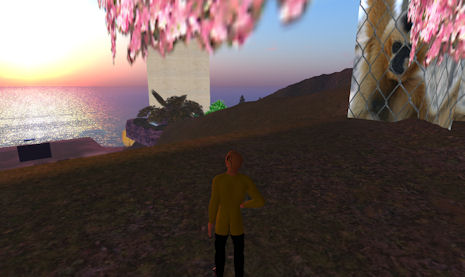
The plot, which has great sea views, already hosts a nice cherry blossom and one high resolution gibbon – complete with gibbon song environmental sound.
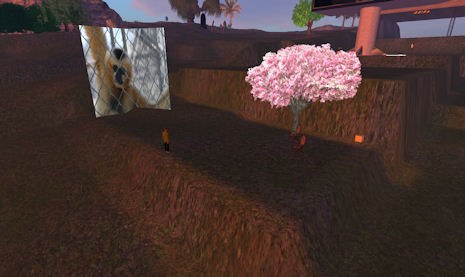
Be it ever so humble......
Sunset with gibbon

This is all part of an effort to explore and get to grips with virtual worlds as a vehicle for science communication. Having bought the land, I now have somewhere to practice building and scripting. Second Life uses a Java type coding language, but as the last coding I did was of a thermodynamic model for energy minimisation in silicate slag systems – in FORTRAN77 – I’m on a learning curve.

Watch this space…….

(I took the gibbon photo at the Santa Clarita Gibbon Conservation Center run by Alan Mootnick – hereby acknowledged and to which you are welcome to make a donation 🙂 )

Update January 2009 – Zoonmian’s Second Life presence can now be found at this location.
Oldest Animal

UK newspaper ‘The Independent’ today featured this spine tingling story about what is probably the world’s oldest animal, and reminding us that man doesn’t hold all the cards – especially when it comes to longevity.

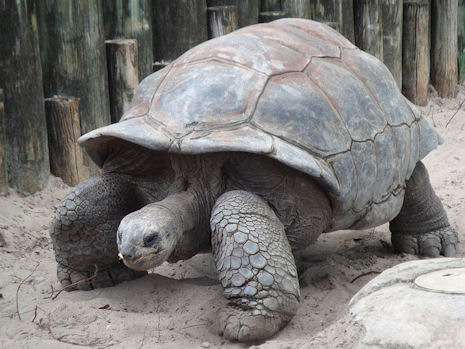
A Galapogos tortoise (photo WikiCommons)

I gave Nippy, the world’s oldest gibbon, a mention earlier this year when he passed away at almost 60 years of age. Now we find there is actual photographic evidence that a giant tortoise from St.Helena has probably lived to more than 175 years. That would make ‘Jonathan’ the world’s oldest living animal.

Of course there are trees and funghi that have lived much longer, but without resorting to the fantasy of Tolkien’s noble ‘Ents’, its not the same thing.

Ancient sequoia……not the same thing (photo WikiCommons)

The last excitement we had in the same vein was the death of the Galapagos tortoise ‘Harriet’, who reached 175 years spot-on, and the accolade she may have owned the oldest eyeballs to have formed an image of the living Charles Darwin.