
Zoonomian Podcast – Interview with Alan Mootnick, Director Gibbon Conservation Center, Santa Clarita, California

Alan Mootnick

(Update 4th November 2011.  We were very sorry to hear of Alan’s death earlier today.  A fantastic guy and unmatched friend of gibbons.  Rest in peace Alan.)

What better way to spend Christmas than in the company of your favourite gibbons?   That’s exactly what my wife Erin and I did on the 26th December 2008, on our second visit to the Gibbon Conservation Center at Santa Clarita, California – home to some of the world’s rarest gibbons.

As well as catching up with gibbon families first met in September and described in this earlier post, I recorded the gibbons singing, and an extended interview with the Founder and Director of the Center, Alan Mootnick.

Much of what Alan has to say about working in gibbon conservation with various institutes, authorities, and peoples around the world, and particularly in Asia, is also relevant to other species.

Pileated gibbon, young female Dec. 2008

Each recording lasts between 3 and 10 minutes, with the entire interview as one edit included at the end.
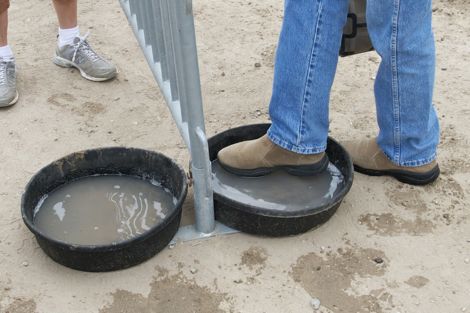
gibbon center foot wash


Part 1 – Arrival

An early morning tour ends in a noisy chorus.

Alan Mootnick speaking at a fundraising event


Part 2 – Introduction

Alan introduces the aims of the Center, the various gibbon genera and species, and gives a disturbing account of the threats facing wild gibbons.

gibbon at santa clarita gibbon center


Part 3 – Breeding Program

Alan describes the breeding program for the Javan gibbon – of which only 4000 remain in the wild, the Center’s collaboration with zoos – including in the UK, and the challenges of finding gibbons for study in the wild.

 

Part 4 – Taxonomy

Gibbon genomics, taxonomy, and a showcase of mistaken identity.  The challenges of moving gibbons and their DNA around the world, and the role  of faeces in working out bloodlines.

Part 5 – Behaviour

Including apparent similarities with man, and discussion around gibbon song and brachiation (swinging arm to arm).  The highlight is Alan’s empirically supported theory of hostile genital or anal presenting – ‘gibbon mooning’ in other words.

Part 6 – Volunteer Program

Including the possibility of joining the Center from the UK.

Part 7 – Threats

Discusses issues around land management and deforestation in Indonesia, the illegal trade in gibbons, and the impact that’s having on the gibbon population.  Also some tips on how to work to best effect when dealing with zoos in Asia.

And this is the entire interview as a single edit:

*********

60Mb. Approx. 1 hour. Copyright, all rights reserved, 2009, Tim Jones  communicatescience.com

*********

If you enjoyed hearing about – and hearing ! – the gibbons of Santa Clarita, and would like to make a donation, you can do so here.

Rip-Off Meds

Time for a short rant on a topic that consistently bugs me, and brought to mind by the tardy unpacking of goodies from my US trip: the relative cost of common drugs in the UK and America.

Generic Ibuprofen
Generic Ibuprofen

Take the common anti-inflammatory (NSAID) painkiller Ibuprofen.  Consider the various ways a UK consumer can buy the standard 200mg tablet (price per tablet in UK pennies, 100 pennies = £1):

High street branded Nurofen  (16) 15p

High street branded Nurofen (96)  11p

High street retailer’s own brand (Boots Ltd) (16) 6.2p

High street retailer’s own brand (Boots Ltd) (96) 6.2p

UK internet vendor (e.g.Chemist4u) (16) 3.7p

UK internet vendor (e.g.Chemist4u) (96) 2.2p

US internet vendor selling into UK (e.g. International Drugstore) in £ (500) 1.8p

US high street price at £1=$1.5) 1.7p

That’s a price range of nearly 900% for the same thing !     What are the messages – several:

1. For best value, a UK customer should buy ibuprofen  from a US internet retailer selling into the UK at the prevailing exchange rate (example International Drugstore)

2. On the same shelf, branded product carries a 240% mark-up.  That’s one expensive glossy box – you better buy into the placebo effect.

3. Boots do not give any volume discount (I suspect they have a special bean-counter dedicated to avoiding this on many of their products)

4. With the exchange rate shift, there is no longer any significant advantage (£0.01)  to physically buying this product in the US and bringing it to the UK (for example on your holidays)

5. Again, with the latest exchange rate moves, my premise that drugs are cheaper in the US is only now true – at least for ibuprofen – for the highstreet; internet prices are similar.

Take the above for what it is – half an hour’s research.  But you don’t need ten decimal places or to be a procurement professional to see what’s going on.


Update 29/6/11

May also be of interest: Generic drug ruling leaves out consumers (L.A.Times)


End Of An Icon?

It was sad to hear the news today that Waterford Wedgwood, the company formed from an amalgamation of Waterford glass and Wedgwood pottery, has fallen into administration.

The name Wedgwood, and its most characteristic and recognised Jasper Ware products, are well known icons of the British pottery industry.   Perhaps less well known are the links between the founder of Wedgwood pottery, Josiah Wedgwood, and the Darwin family – including Erasmus Darwin, the inspiration for this blog.

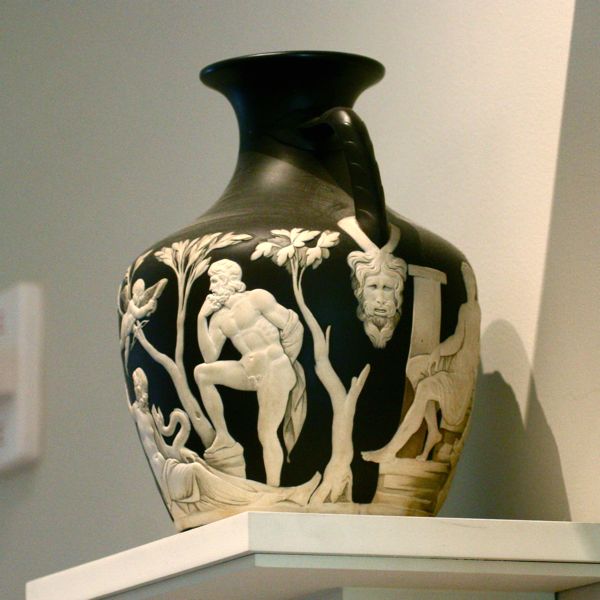
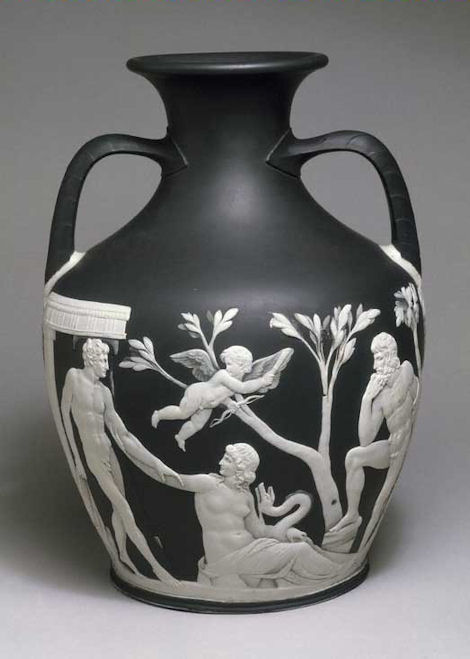
vase
Wedgwood's Portland Vase

As discussed in this earlier post, Erasmus and Josiah were close friends and core  ‘Lunar Men’.  The two exchanged ideas and letters on a range of topics from canals to pyrometers,  Erasmus bringing his chemistry knowledge to bear in developing new colours for pottery.   He later designed a windmill for grinding  pigments at Wedgwood’s factory at ‘Etruria’.

Wedgwood’s daughter Susannah gave Erasmus music lessons and, by the by, came to marry his son Robert, establishing a trend maintained by Charles Darwin when he married his first cousin Emma, the daughter of Josiah (II).

Portland Vase by Wedgewood at the Huntingdon Gallery, San Marino
Portland Vase at the Huntington Gallery, San Marino CA

Wedgwood’s most famous pottery design is the ‘Portland Vase’, a reproduction in Jasper Ware of a piece of (probably) Roman cameo-glassware.  In 2003, something of a controversy blew up regarding the true age of the vase, one which, as this Guardian article explains, science was not able to unravel.

Portland Vases are still being made at Wedgwood but, priced at £4893, are evidently not moving in sufficient quantity to save the business.  When Erasmus received one of the first of these technically challenging pieces, he characteristically proceeded to analyse and document the various Roman scenes; he dedicates 7 pages of text and 4 fold-out drawings to it in his Botanic Garden of  1791.

Update 5 Feb 2012  Wedgewood Museum to close (In the Guardian) Link HERE