March now, last post July 2014. Goodness, I have been sleeping. Anyhow, with Symbyartic rallying for a sciart Tsumani, now seems as good a time as any to awaken the blog and scour the archives for sciencey stuff with an arty twist.
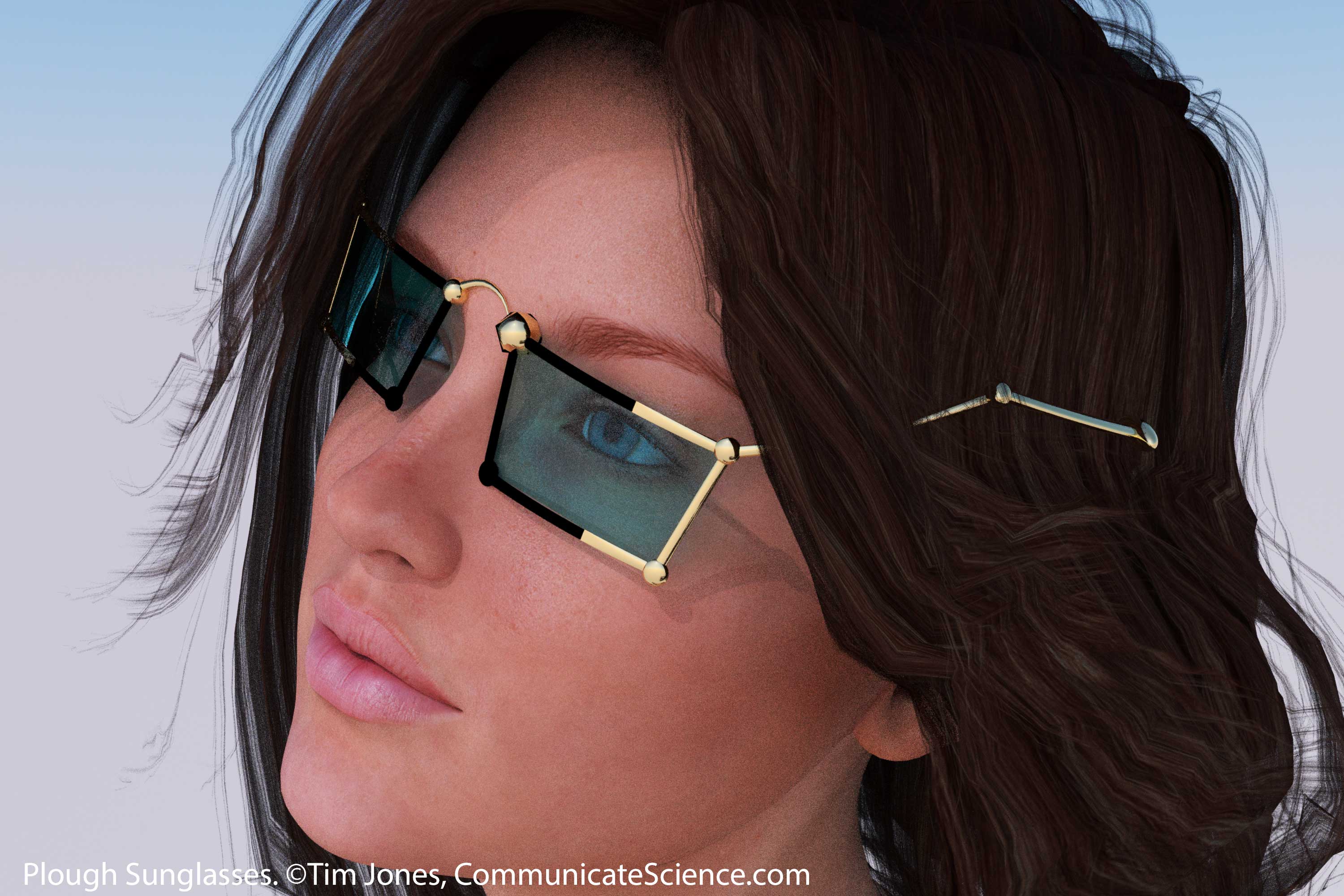
Here’s a previously unpublished one from me. My better half is a silversmith, I like my astronomy, and this is a concept I knocked up in various 3D modelling and rendering softwares. As heavenly an embrace of the Two Cultures ne’re there was! Just need to figure out how to make it now.
I began by testing if the physically based render program Luxrender can make a believable simulation of white light passing through a prism.
Unbiased render engines like Luxrender send out many virtual photons and calculate their paths according to physical laws, and as the ray-tracing algorithm includes colour dispersion, it should work.
Experimentum Crucis
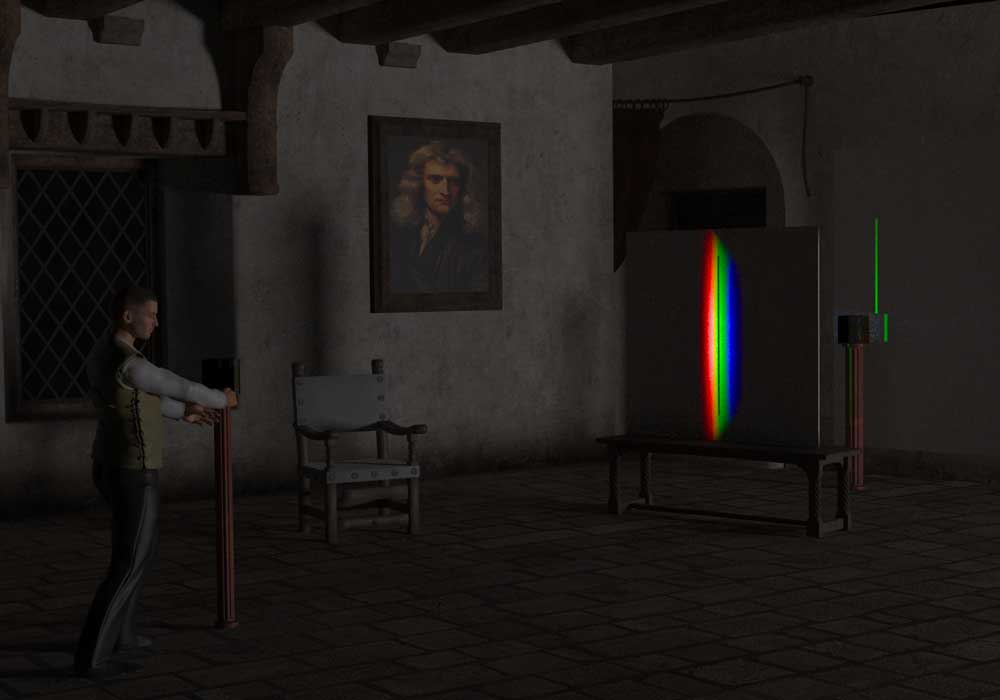
Adding a second prism gives us Isaac Newton’s ‘Experimentum Crucis’: one of a series of experiments performed by Newton in 1666 and reported in a letter to the Royal Society in 1671 (1), showing how white light is composed of a range of colours separable by a prism.
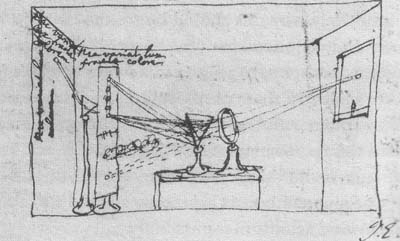
Newton then demonstrated the colours were a property of the light, not the prism, by using a slit to isolate an individual colour from one prism, and passing it through a second where no further separation of colours occurs – the second prism just refracts the single colour to one side. Here is Newton’s own drawing of his two-prism experiment.
Experimentum Crucis
Virtual set-up and approximations
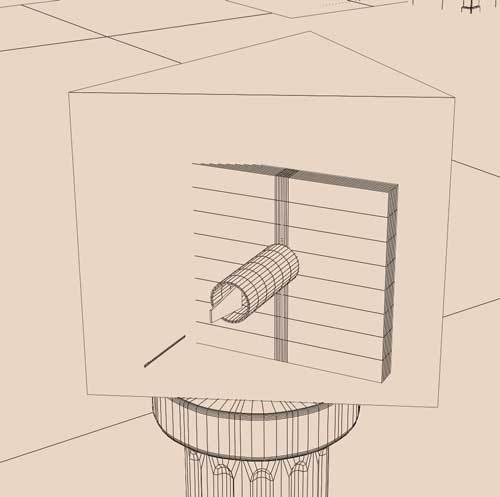
My distances and prism sizes are not accurate, but the simulation still works. Also, Newton used the sun as a light source: passed through a slit before the first prism or focused through a lens. By contrast, my source is a small rectangular surface radiating in all forward directions followed by a collimating tunnel.
If the real or simulated light source is too ill-defined or unfocused, the separation in the spectrum can look superficially reasonable, but actually comprise several fuzzy overlapping spectra. As a result, running without the collimator caused the green band to split into further colours. That said, it’s worth remembering that while Newton reported seeing seven colours, the actual spectrum is a continuum of wavelengths, so a single colour will in fact be made of a range of further dispersible shades – we just don’t discern it.
Results
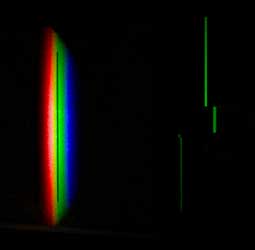
Here is a close-up of the isolating slit and the green spectral ‘line’ deviated but not dispersed by the second prism. I’ve also in this picture turned out the background light used solely for dramatic effect in the first picture.
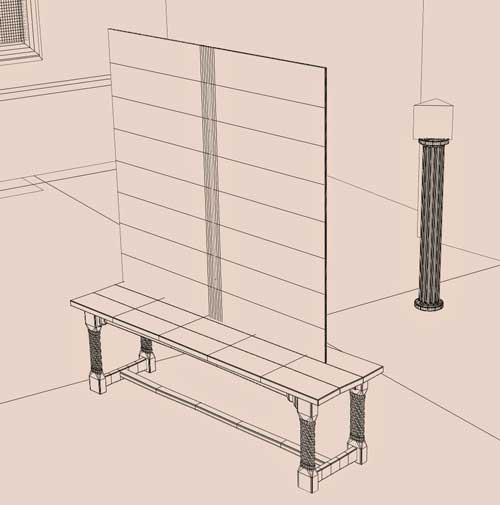
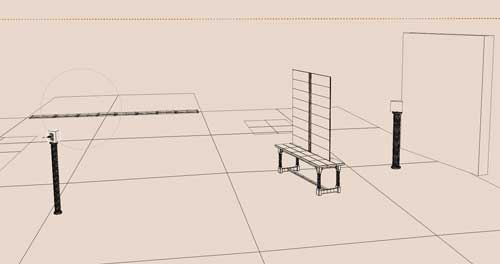
And here are wireframe pics of the layout (scene created in Poser and linked to Luxrender via Reality):
Other Observations
An interesting feature of this type of modelling is the need for a so-called Tone Mapping process. This requires the multiple wavelengths to which the ray-tracing maths is applied to simulate dispersion are translated into the red, blue, and green (RGB) that the computer monitor can display.
This sort of progam is limited as a virtual optical bench. Luxrender cannot, for example, calculate the quantum probability amplitudes necessary to simulate interference as seen in the double slit experiment.
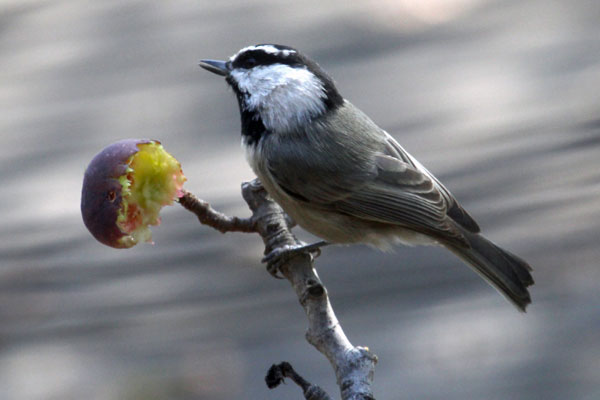
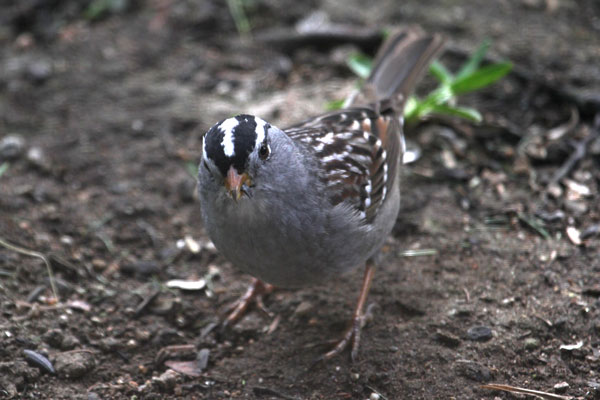
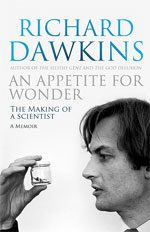
I’ve just finished Richard Dawkins’s self-narrated audiobook of An Appetite for Wonder: The Making of a Scientist, where, introducing a task given to him by his research supervisor Niko Tinbergen, related to nature versus nurture aspects of animal behaviour, he makes special mention of the White-crowned Sparrow (Zonotrichia leucophrys nuttalli). As it happens, earlier this year I caught this native of North America pecking at a fig.
Is behaviour built in at birth – innate and instinctive? Or is it learned from experience? One way ethologists, who study animal behaviour, try to answer such questions is to compare the behaviour of subjects artificially deprived of normal early life learning opportunities with those raised in their natural habitat.
In the case of birdsong, tests on Sedge Warblers show they automatically know their song without ever hearing the tune from another bird. As Dawkins puts it, they ‘fumble’ towards the final song, trying different sounds and sequences from which they assemble a correct version; so the process is innate: it’s all ‘nature’.
The White-crowned Sparrow also teaches itself to sing its unique song by fumbling and picking out the good bits, but, unlike the Sedge Warbler, it needs to have heard its song from another White-crowned sparrow in early life; it needs a prompt to know where it’s going – so to speak. As for many animal behaviours, including human behaviours, the White-crowned Sparrow’s song is the product of a nature-nurture combo of innate and learned influences. Dawkins wonders what similar early life deprivation experiments, within ethical bounds, might be made to study the human condition.
You can hear the White-crowned sparrows song here at the Cornell Lab of Ornithology.
This is my chunk of Lapis Lazuli: mainly lazurite ((Na,Ca)8(AlSiO4)6(S,SO4,Cl)1-2) with some shiny pyrite (iron sulphide) streaks. This piece is about 3 inches high. It’s a semi-precious stone which when ground up becomes ultramarine, the intense blue pigment you see in old religious paintings. Modern ultramarine is most often synthetic.
Strangely perhaps, my resonance with this rock is poetic, not scientific, as it featured in a Robert Browning poem I studied for my English Literature O-Level; I can still remember sitting in the exam scribbling – all those years ago when dinosaurs still roamed the Earth.
So here it is. The storyline is about an old Bishop on his death bed, planning the construction of his tomb in a prime spot in the church – something that will outshine that of his predecessor Gandolf (as opposed to Gandalf). As he rants, the materials of the tomb get grander and grander, progressing from basalt, then basalt embellished with a lump of lapis he has secreted away for the task, to the entire tomb being fashioned from the blue mineral. All the time he’s getting more and paranoid his family will ignore his wishes and bury him in trashy travertine, gritstone, or, horror of horrors: onion-stone. Make of it what you will:
“The Bishop Orders His Tomb at Saint Praxed’s Church”
Vanity, saith the preacher, vanity!
Draw round my bed: is Anselm keeping back?
Nephews — sons mine . . . ah God, I know not! Well —
She, men would have to be your mother once,
Old Gandolf envied me, so fair she was!
What’s done is done, and she is dead beside,
Dead long ago, and I am Bishop since,
And as she died so must we die ourselves,
And thence ye may perceive the world’s a dream.
Life, how and what is it? As here I lie
In this state-chamber, dying by degrees,
Hours and long hours in the dead night, I ask
“Do I live, am I dead?” Peace, peace seems all.
Saint Praxed’s ever was the church for peace;
And so, about this tomb of mine. I fought
With tooth and nail to save my niche, ye know:
— Old Gandolf cozened me, despite my care;
Shrewd was that snatch from out the corner South
He graced his carrion with. God curse the same!
Yet still my niche is not so cramped but thence
One sees the pulpit o’ the epistle-side,
And somewhat of the choir, those silent seats,
And up into the aery dome where live
The angels, and a sunbeam’s sure to lurk;
And I shall fill my slab of basalt there,
And ‘neath my tabernacle take my rest,
With those nine columns round me, two and two,
The odd one at my feet where Anselm stands:
Peach-blossom marble all, the rare, the ripe
As fresh-poured red wine of a mighty pulse.
— Old Gandolf with his paltry onion-stone,
Put me where I may look at him! True peach,
Rosy and flawless: how I earned the prize!
Draw close: that conflagration of my church
— What then? So much was saved if aught were missed!
My sons, ye would not be my death? Go dig
The white-grape vineyard where the oil-press stood,
Drop water gently till the surface sink,
And if ye find . . . Ah God, I know not, I! . . .
Bedded in store of rotten fig-leaves soft,
And corded up in a tight olive-frail,
Some lump, ah God, of ,
Big as a Jew’s head cut off at the nape,
Blue as a vein o’er the Madonna’s breast . . .
Sons, all have I bequeathed you, villas, all,
That brave Frascati villa with its bath,
So, let the blue lump poise between my knees,
Like God the Father’s globe on both his hands
Ye worship in the Jesu Church so gay,
For Gandolf shall not choose but see and burst!
Swift as a weaver’s shuttle fleet our years:
Man goeth to the grave, and where is he?
Did I say basalt for my slab, sons? Black —
‘T was ever antique-black I meant! How else
Shall ye contrast my frieze to come beneath?
The bas-relief in bronze ye promised me,
Those Pans and Nymphs ye wot of, and perchance
Some tripod, thyrsus, with a vase or so,
The Saviour at his sermon on the mount,
Saint Praxed in a glory, and one Pan
Ready to twitch the Nymph’s last garment off,
And Moses with the tables . . . but I know
Ye mark me not! What do they whisper thee,
Child of my bowels, Anselm? Ah, ye hope
To revel down my villas while I gasp
Bricked o’er with beggar’s mouldy travertine
Which Gandolf from his tomb-top chuckles at!
Nay, boys, ye love me — all of jasper, then!
‘T is jasper ye stand pledged to, lest I grieve.
My bath must needs be left behind, alas!
One block, pure green as a pistachio-nut,
There’s plenty jasper somewhere in the world —
And have I not Saint Praxed’s ear to pray
Horses for ye, and brown Greek manuscripts,
And mistresses with great smooth marbly limbs?
— That’s if ye carve my epitaph aright,
Choice Latin, picked phrase, Tully’s every word,
No gaudy ware like Gandolf’s second line —
Tully, my masters? Ulpian serves his need!
And then how I shall lie through centuries,
And hear the blessed mutter of the mass,
And see God made and eaten all day long,
And feel the steady candle-flame, and taste
Good strong thick stupefying incense-smoke!
For as I lie here, hours of the dead night,
Dying in state and by such slow degrees,
I fold my arms as if they clasped a crook,
And stretch my feet forth straight as stone can point,
And let the bedclothes, for a mortcloth, drop
Into great laps and folds of sculptor’s-work:
And as yon tapers dwindle, and strange thoughts
Grow, with a certain humming in my ears,
About the life before I lived this life,
And this life too, popes, cardinals and priests,
Saint Praxed at his sermon on the mount,
Your tall pale mother with her talking eyes,
And new-found agate urns as fresh as day,
And marble’s language, Latin pure, discreet,
— Aha, ELUCESCEBAT quoth our friend?
No Tully, said I, Ulpian at the best!
Evil and brief hath been my pilgrimage.
All lapis, all, sons! Else I give the Pope
My villas! Will ye ever eat my heart?
Ever your eyes were as a lizard’s quick,
They glitter like your mother’s for my soul,
Or ye would heighten my impoverished frieze,
Piece out its starved design, and fill my vase
With grapes, and add a vizor and a Term,
And to the tripod ye would tie a lynx
That in his struggle throws the thyrsus down,
To comfort me on my entablature
Whereon I am to lie till I must ask
“Do I live, am I dead?” There, leave me, there!
For ye have stabbed me with ingratitude
To death — ye wish it — God, ye wish it! Stone —
Gritstone, a-crumble! Clammy squares which sweat
As if the corpse they keep were oozing through —
And no more lapis to delight the world!
Well go! I bless ye. Fewer tapers there,
But in a row: and, going, turn your backs
— Ay, like departing altar-ministrants,
And leave me in my church, the church for peace,
That I may watch at leisure if he leers —
Old Gandolf, at me, from his onion-stone,
As still he envied me, so fair she was!
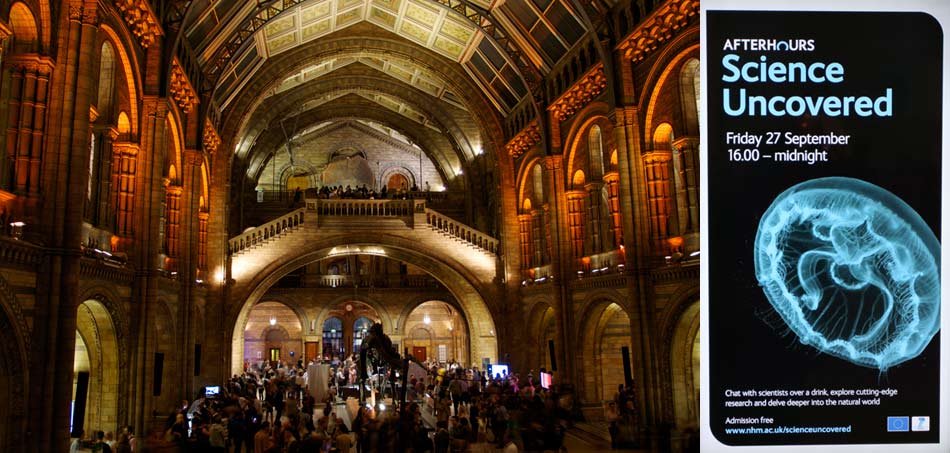
A few pictures from last night’s event at the Natural History Museum in London: Science Uncovered 2013, a once a year special as part of the Europe-wide European Researchers’ Night.
I think this format is fantastic. Ideal for Londoners spilling out of work on a Friday evening, with food and drink available and the opportunity to meet and chat with NHM scientists about current research or anything else. The place was packed out. I’ve been to some of the Science Museum ‘Lates’, and they are incredibly popular, but I’ve never seen the NHM this busy:
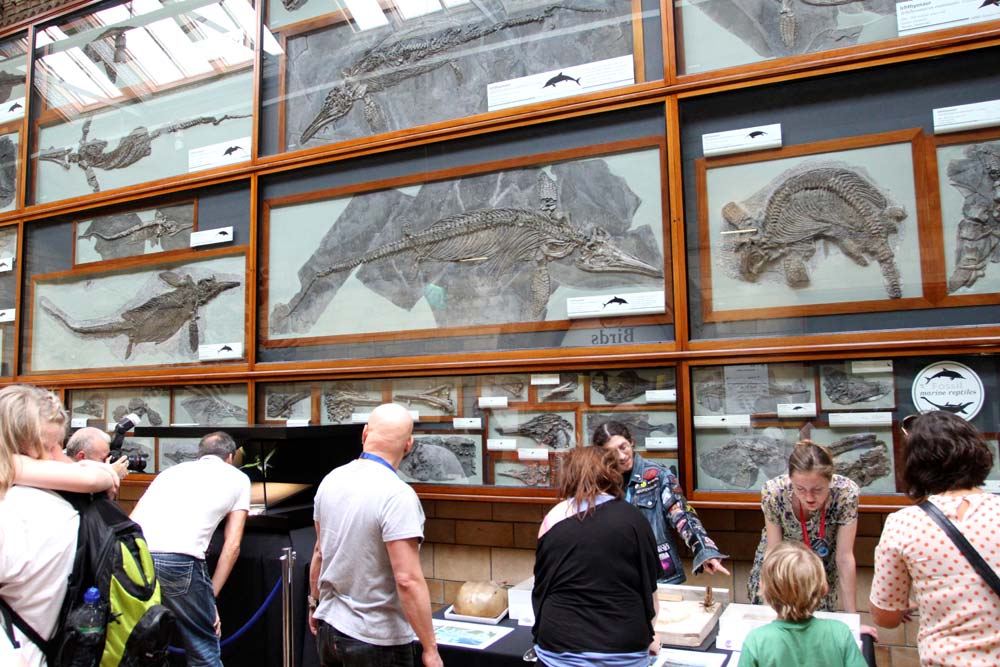
Fossil Marine Reptiles
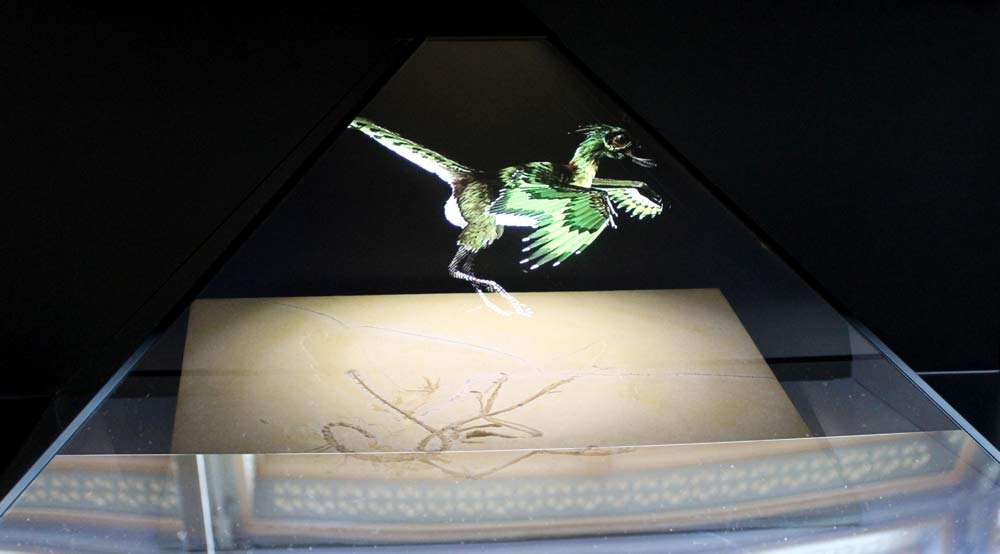
Archaeopteryx fossil and hologram
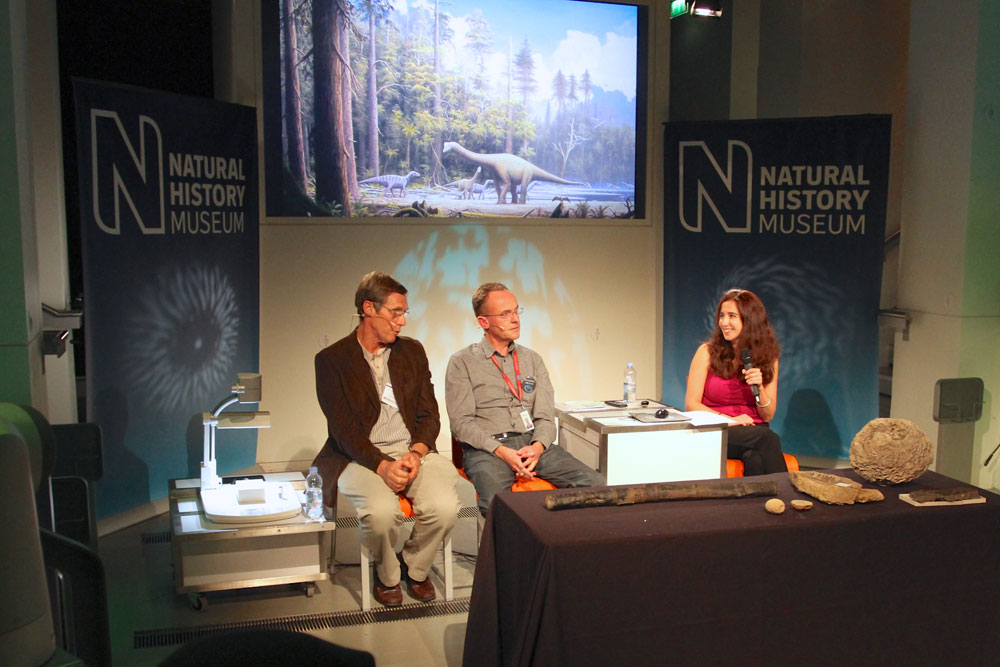
Special Nature Live on the discovery and recovery of ‘The Jurassic Tree’ in the Attenborough Studio
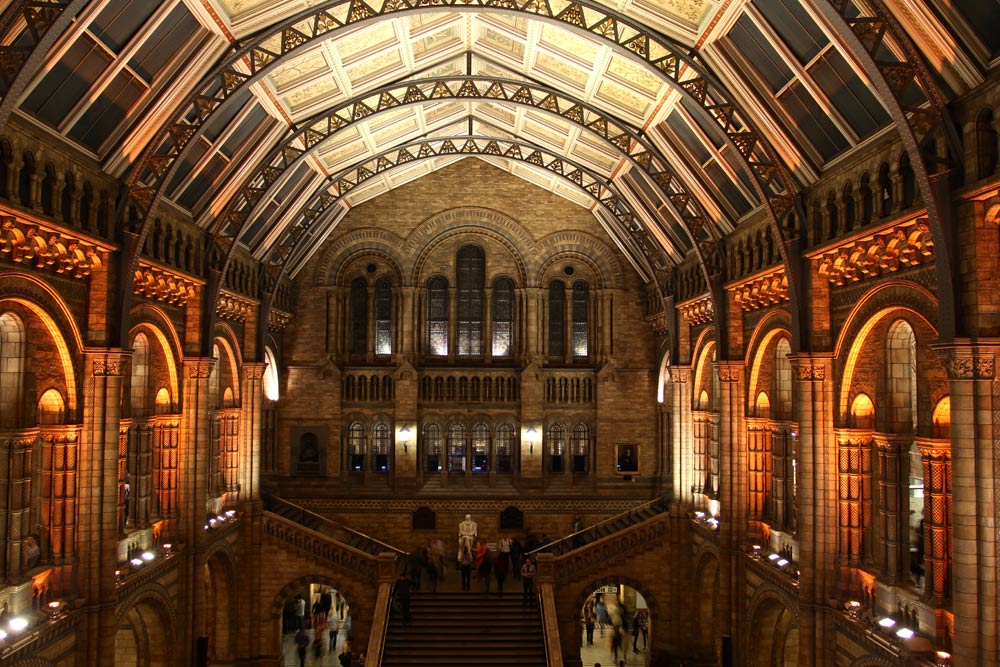
Charles Darwin holds court over the proceedings
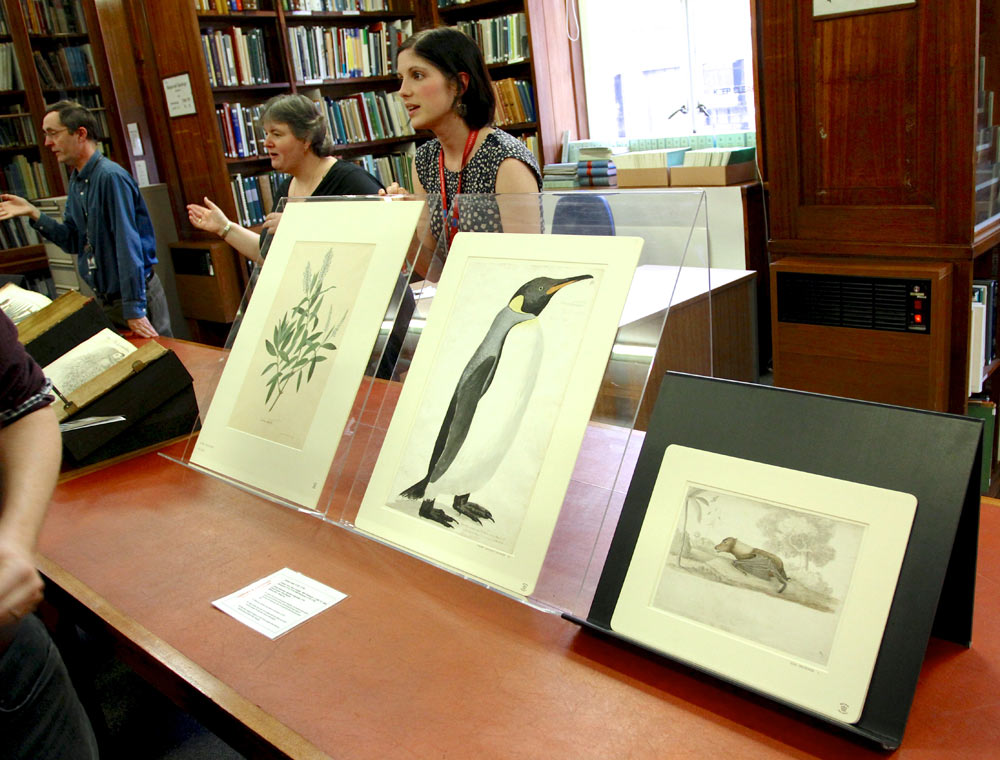
Item’s from the Library archive. Archivist for the Wallace Correspondence Project Caroline Catchpole here with three documents from Cook’s voyages
Back to your roots with a spot of cave painting
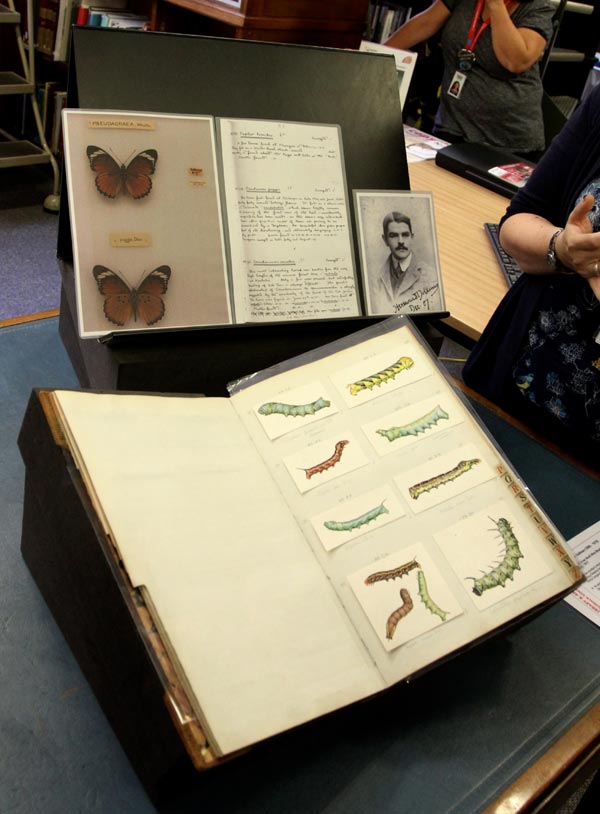
Librarian Hellen Sharman shared the tragic story and fine artistry of Hereward Chune Dollman (1888-1919), who died of the Sleeping Sickness he went to Africa to study.
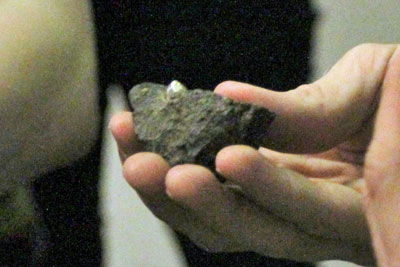
A chance to handle specimens. Natural diamond crystal in Kimberlite
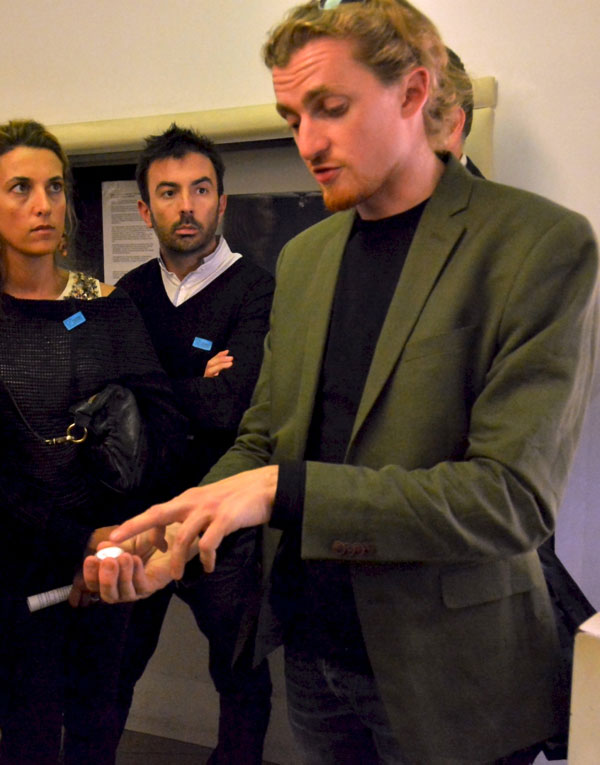
Mike Rumsey of the Earth Sciences Dept. explains what inclusions can tell us about the origins of diamonds
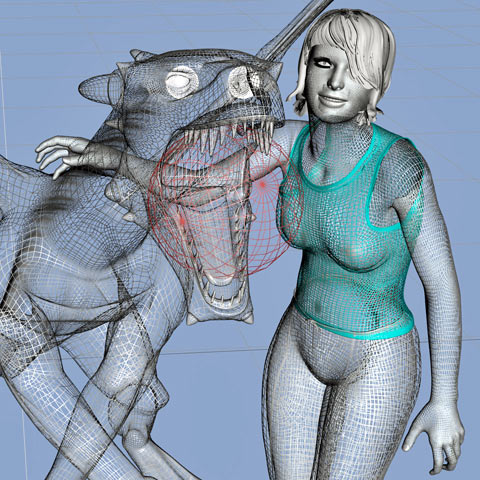
Just a bit of fun really; but I’ve been mugging up on the basics of CGI. Things sure have moved on from the days of Muybridge and flip books ! Here’s my first attempt:
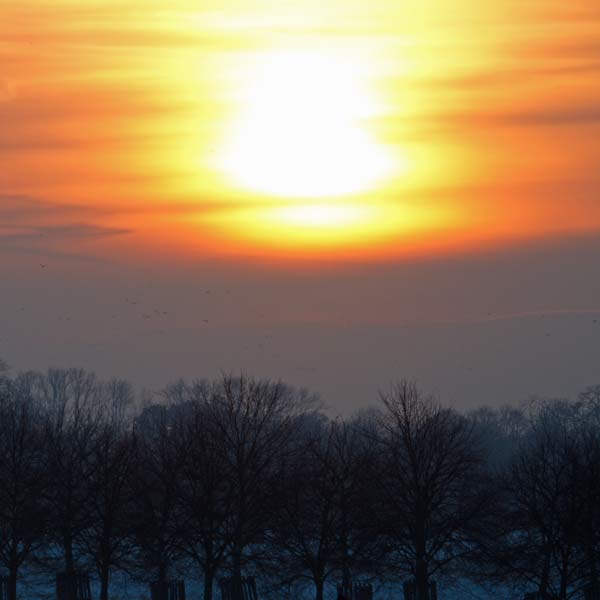
In May 1915, Ernest Shackleton and the crew of Endurance entered their fourth month trapped in the frozen Antarctic’s Weddell Sea. The ship’s navigator added to the gloom forecasting a sunless sky for the next seventy days. You expect this at above 75° South. Then on the 8th of May something strange happened. The Sun reappeared – several times:
The sun, which had made “positively his last appearance” seven days earlier, surprised us by lifting more than half its disk above the horizon on May 8. A glow on the northern horizon resolved itself into the sun at 11 a.m. that day. A quarter of an hour later the unseasonable visitor disappeared again, only to rise again at 11.40 a.m., set at 1 p.m., rise at 1.10 p.m.. and set lingeringly at 1.20 p.m.
Ernest Shackleton, 19151
Shackleton understood the effects of atmospheric refraction, that temperature and density differences can bend light, especially near the horizon. At sunrise and sunset the Sun’s disk may appear lengthened or flattened, or displaced from its true position in the sky.
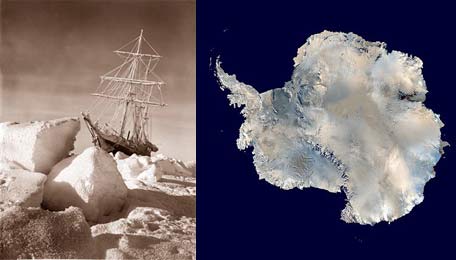
Ernest Shackleton made his observations from the Endurance while frozen in the Weddell Sea (the bay top left)
Mariners knew of the phenomenon, referencing standard refraction tables to correct sextant readings for navigation; but the system broke down below about 6 degrees, where refraction increased rapidly and non-linearly.
In this case, as Shackleton recorded in his journal, the Sun was 2 degrees and 37 minutes (2°37′) from its true position, 2 degrees more than the refraction tables predicted. Plotting position from this observation would place the Endurance 120 miles from its actual location.
The Novaya Zemlya Effect
What Shackleton experienced was an extreme case of atmospheric refraction known as the Novaya Zemlya effect.
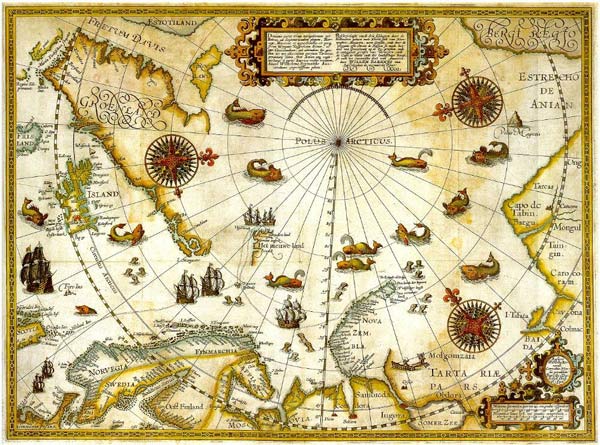
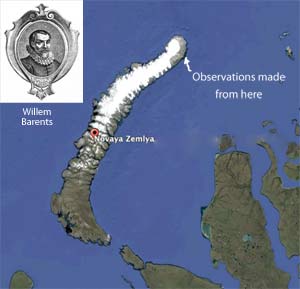
It was first reported in 1597 by Gerrit De Veer2 , one of the crew on Willem Barent’s third voyage to discover a north-east passage. Obliged to hunker down for the polar winter in a safety hut or ‘Het Behouden Huijs‘ built on the Novaya Zemlya island chain north of Russia, De Veer reported the return of the post-winter Sun a whole two weeks before it should have been visible. It was in fact 5°26’ below the horizon. The same thing happened two days later, the Sun still – by the book – 4° below the horizon.
Map depicting Willem Barents three voyages to discover a North East Passage, showing the Novaya Zemlya islands (Wikipedia)
The Novaya Zemlya effect occurs in Arctic regions where tracts of cold air remain uniquely stable over hundreds of kilometers, creating a special instance of a meteorological temperature inversion. The distortion, powerful enough to bend light through four or five degrees, can make celestial bodies like the Sun or Moon appear wholly above the horizon when they are physically below it. (If you imagine looking at the horizon, five degrees is the same as ten Suns or Moons in a row.)
For hundreds of years, nobody believed Gerrit De Veer’s solar observations, and equally his report of a curiously displaced conjunction of the Moon and Jupiter. He must have counted the days wrong, or used the wrong sort of calendar. It took the corroborating reports of polar explorers like Shackleton and, as recently as 2003, ray-tracing simulations3 using contemporary atmospheric data, to fully vindicate De Veer.
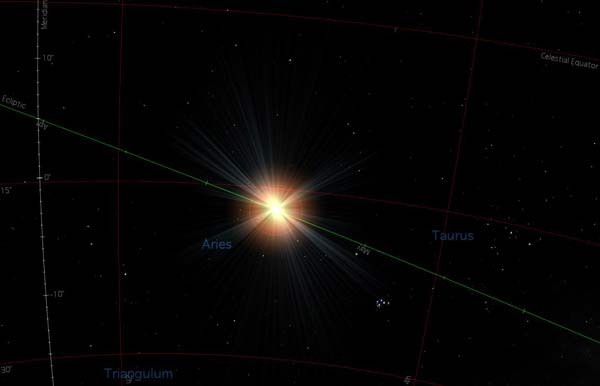
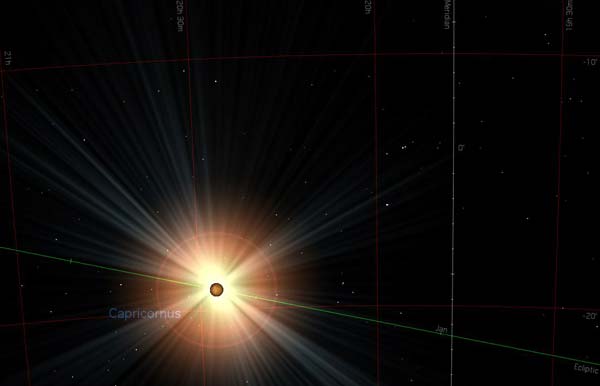
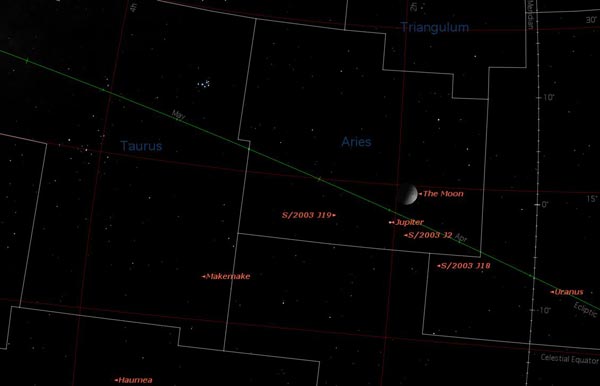
I’ve set up my own simulations of the celestial events reported by Shackleton and De Veer using the planetarium software Starry Night. The program can’t reproduce the ray traced refraction effects modeled by van der Werf et al3 – whose validity I’m not equipped to comment on by the way, but it’s still satisfying to check the published numbers and get a feel for what the events looked like all those years ago.
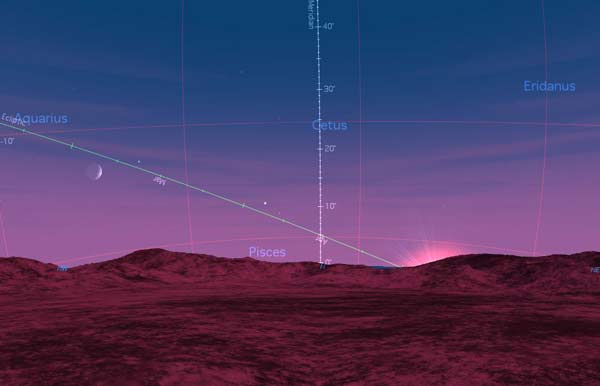
The horizon terrain here is generic Starry Night; apart from being icy-white, the true horizon would run perpendicular to and cross the graduated white Meridian line at zero (0) degrees. The green line is the Ecliptic. Things are clearer for our purposes, if less romantic, if we turn off the daylight effect and fancy terrain and zoom in a bit. It’s now clear the Sun was below the horizon when Shackleton reported seeing it: i.e. with reference to the Meridian on the left, the Sun looks about two and half degrees below the zero degree mark (Shackleton’s 2°37′):
Willem Barent’s crew, marooned 300 years earlier at the opposite end of the planet, made their observations from the ‘Behouden Huijs‘ at coördinates 76° 15.4′ North 68°18.6’ East, Novaya Zemlya. This view from the Huijs at 7 o’clock on the morning of 24th January 1597, shows the Sun was firmly below the horizon when Gerrit De Veer observed it – a whole 5°26′ below (horizon is perpendicular to the zero mark on the white Meridian line, green line is the Ecliptic):
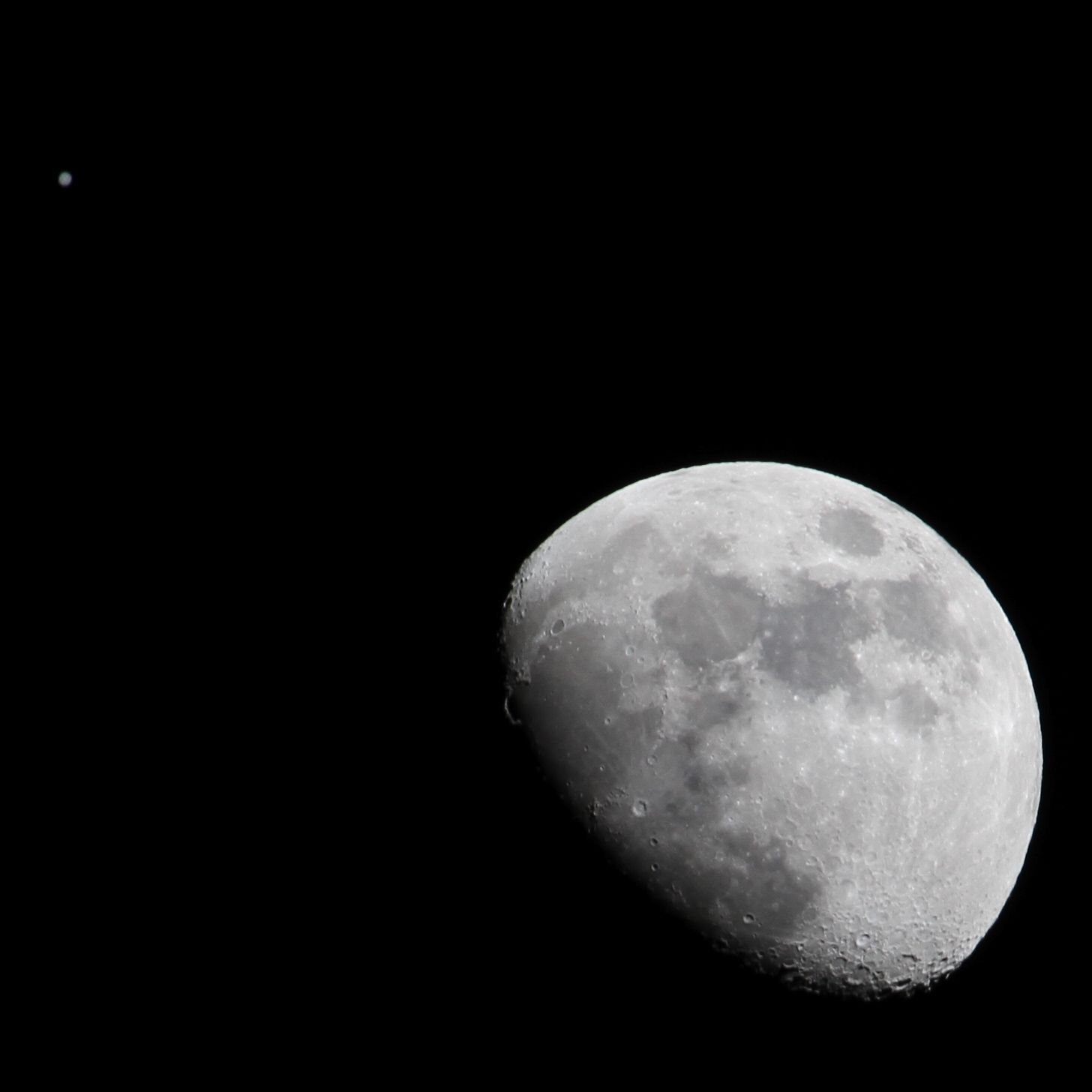
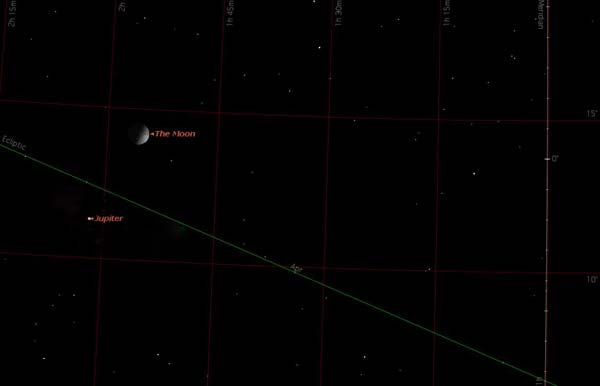
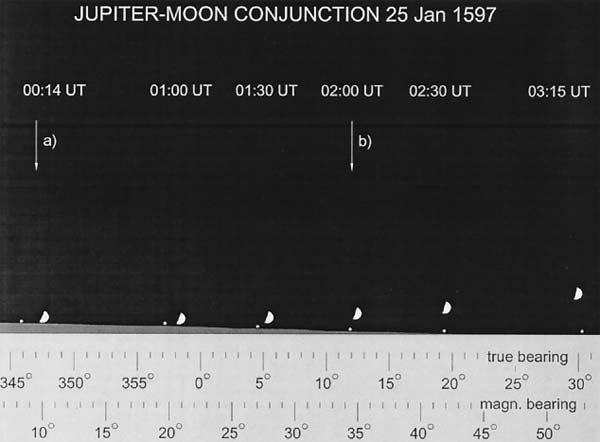
The Moon-Jupiter conjunction reported by De Veer physically happened at 0:14 UT on 25th January 1597 (there is a small error in the 0:24 UT time given in the contemporary tables by Scala that De Veer used). Like astronomers today, De Veer identified the moment of conjunction as the time when a line drawn along the shadow separating light from dark on the moon’s surface, the terminator, pointed directly at Jupiter, as in this photograph I took of the Moon-Jupiter conjunction of 21 January 2012:
The Moon is barely above the horizon and Jupiter is below it (again, reference the zero on the white Meridian line).
Gerrit De Veer saw this view, but over an hour after it happened: i.e. at 01:27 UT not 00:14 UT. As van der Werf’s analysis explains, De Veer reported the conjunction at 6 a.m. local time, which was 4:33 hours ahead of UT. Such was the unbelievable power of the Novaya Zemlya effect to make this happen that few indeed believed it. De Veer learned about the conjunction from his copy of the Ephemerides of Josephus Scala which gave times for Venice. Here we pick up the story in De Veer’s own words and the spellings of his 1609 translator William Phillip:
Whereupon we sought to knowe when the same coniunction should be ouer or about the house where we then were; and at last we found, yt the 24 day January was the same day whereon the coniunction aforesaid happened in Venice, at one of the clocke in the night [= 1 in the morning of 25th Jan], and with vs in the morning when ye sun was in the east: for we saw manifestly that the two planets aforesaid approached neere vnto each other, vntill such time as the moone and Jupiter stood ouer the other, both in the sign of Taurus, and that was at six of the clocke in the morning;at which time the moone and Jupiter were found by our compas to be in coniunction, ouer our house..
Gerrit De Veer 1597
Yet ray tracing the scenario 400 years later, with Jupiter two degrees below the horizon and the Moon just above it at conjunction, shows that atmospheric conditions raised Jupiter’s apparent position disproportionately to that of the Moon. Moreover, the simulation reproduced what De Veer saw at the time he saw it: a conjunction visible to him at around 02:00 UT. The ray tracing team made a further minor adjustment for the Equation of Time effect, which brought their estimate of when the conjunction was visible to De Veer as 06:20 local time, which is impressively close to his 06:00.)
Apparent position of Jupiter and the Moon after allowing for atmospheric refraction. Moon is double actual size for clarity. Diagram reproduced from analysis by van der Werf et al, 2003 (reference 3)
One More Thing
Although Gerrit De Veer’s vindication now seems complete, there was one little alarm bell went off during my research, concerning De Veer’s reference to both the Moon and Jupiter being in the constellation of Taurus at the time of conjunction. Zooming in to see the 1597 conjunction against modern constellation boundaries puts it well into Aries. So what gives?
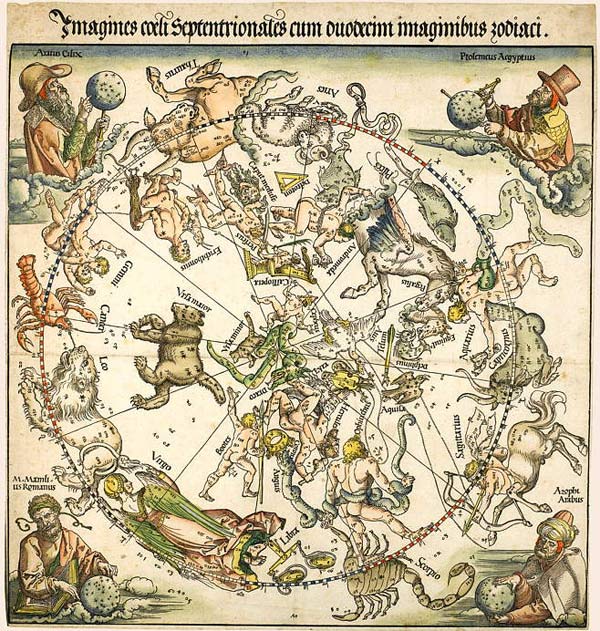
Maybe the constellation boundaries have changed; let’s have a look at Albrecht Dürer’s beautiful star chart from 1515. Here we see the belly of the bull tucks a little further under the ram than in modern charts, but the conjunction is still firmly in Aries.
Star chart of the northern skies, Albrecht Dürer, 1515, Nuremberg.
Maybe the Moon made the stars in Aries harder to see that night. That might cause De Veer to focus on the sparkling Pleiades and Hyades clusters in Taurus. (I’d probably do that if I were standing in a freezing Arctic wasteland staring at the sky at six in the morning.)
Charles Beke4 also noticed the discrepancy in a 19th century analysis of the William Phillip translation. He points to a retrogression of the equinoctial points – the places where the celestial equator intersects the ecliptic. Since De Veer’s day, this will have shifted the positions of the constellations in terms of longitude and latitude relative to those references. Although that suggests De Verre placed the conjunction in whatever constellation the numbers dictated, rather than where he saw it? Still a bit of a mystery to solve then – at least in my mind.
References
E. Shackleton, South: The Story of Shackleton’s Last Expedition 1914–1917, MacMillan, New York, 1920
Gerrit De Veer, The Three Voyages of William Barents to the Arctic Regions (1594, 1595 and 1596). London, 1876 (translation of 1609 original).
Charles T. Beke, The Three Voyages of Willem Barents to the Arctic Regions 1594, 1595 and 1596 by Gerrit de Veer, 2nd ed.William Phillip, trans., Hakluyt Society, London, 1876 (Page 147)
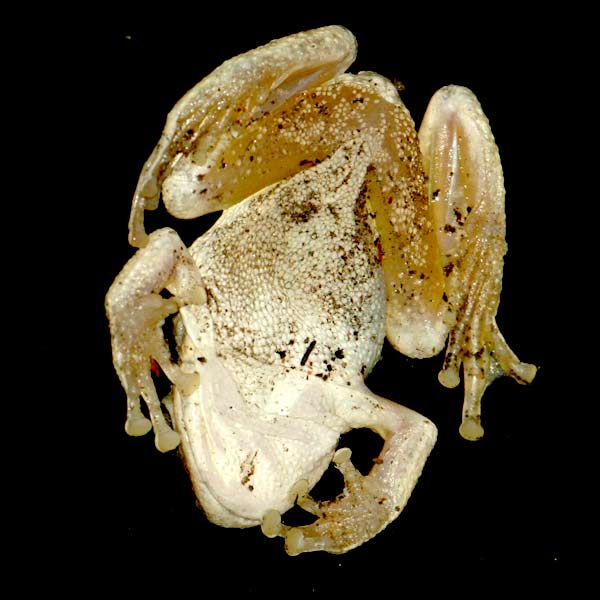
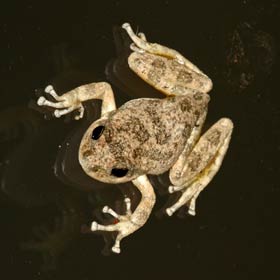
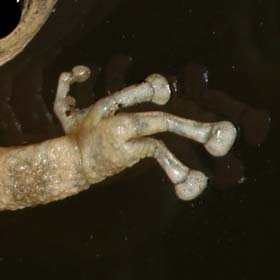
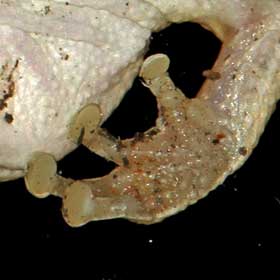
Tree frogs in trees are just fine, but tree frogs on plate-glass windows are better – because then you get to see their slightly icky fascinating undersides.
I must admit, what struck me most when this guy landed – ‘thunk’ – out of a fig tree onto our window in Los Angeles, was how much his (her?) legs looked like raw chicken. I’ve always shied away from those cuisses de grenouille opportunities, but I know the meat is often compared to chicken. Why frogs and chickens developed that way is an interesting question, but not for today’s post.
Rather, now I’m back in the UK , where the frogs are less acrobatic, I’ve tried to figure out how our unexpected visitor managed to cling on.
Wet Adhesion
To understand that for the West Indian tree frog, Oseopilus septentrionalis, researchers Hanna and Barnes1 used active and anaesthetised frogs in experiments that measured the forces they apply walking up vertical surfaces, the angle at which they drop off a gradually inclined surface, and the shear force experienced by an individual toe when the surface it’s attached to is suddenly slid from under it.
The experiments involved placing frogs on a variety of strain-gauge instrumented platforms and surfaces, and making videos of frogs placed on runways and rotating discs of transparent perspex.
The researchers concluded that the primary mechanism tree frogs use to get a grip is exactly the same as that which keeps a sheet of wet paper stuck to the side of a glass: wet adhesion.
Wet adhesion combines a mix of viscous and surface tension forces, both of which require liquid and, in the case of surface tension, an air-liquid interface. In the tree frog, that liquid takes the form of mucous – wait for it – pumped out the ends of its toes.
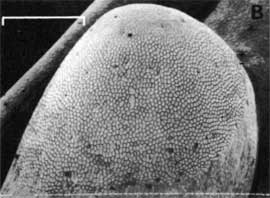
The mucous appears from perfectly smooth-looking toe pads that are actually covered in thousands of peg-like cells between which mucous flows from glands. I can see something going on in my own photographs, but the structure is clear in the SEM picture below.
Hanna and Barnes’s also looked at how tree frogs release themselves to move. The frogs peeled rather than pulled their feet off surfaces, the peeling force engaging automatically in forward movement, but not in reverse or when the belly skin of the frog made contact with the surface.
Frogs placed on a slowly rotating vertical disc reorientated themselves to avoid facing downwards – presumably because of the involuntary forward travel or detachment that would induce. At first sight then, my Pseudacris cadaverina appears to defy that rule – because he’s clearly inverted in one of the pictures; but that could be explained by the extra adhesion he’s getting from the inner thigh area – corresponding to the aforementioned belly skin. What’s more, the authors point out that toe pads have developed independently several times in tree frogs, so the observed peeling mechanism may be peculiar to Oseopilus septentrionalis.
I would have liked to spend more time with this little guy, but after about ten minutes I looked up and he’d gone – probably back into the fig tree. But for a while there he sure provided a level of interest, conversation, and intrigue way out of proportion to his size. Ribbit.
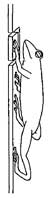
Apparatus to measure climbing force
Tree frog toe pad. After Hanna & Barnes, 1991.
References
1. Adhesion and detachment of the toe pads of tree frogs. Gavin Hanna, W.John Barnes. Journal of Experimental Biology 155, 103-125 (1991)
“A squib is a type of firework, hence damp squib: something that fails ignominiously to satisfy expectations; an anti-climax.”
Oxford English Dictionary
The opportunities for non-scientists to do science have never been greater: it’s called Citizen Science.
Helping out the professionals can involve anything from counting ladybirds in your back yard, to looking for alien life, to classifying galaxies and discovering new planets, to monitoring the population dynamics of the Rose-Ringed Parakeet. Just take your pick from the Zooniverse Smörgåsbord.
But when was the first citizen science project? I’ve been thinking about it lately, and my starter-for-ten comes from some research I did last year about fireworks. There must be other examples, so please comment if you have any.
Not to be distracted by definitions (however interesting – see Openscientist), I’m taking citizen science to mean some sort of research or project where a scientist – or what passed for one at the time – appeals to the public to report observations, measurements, or such like.
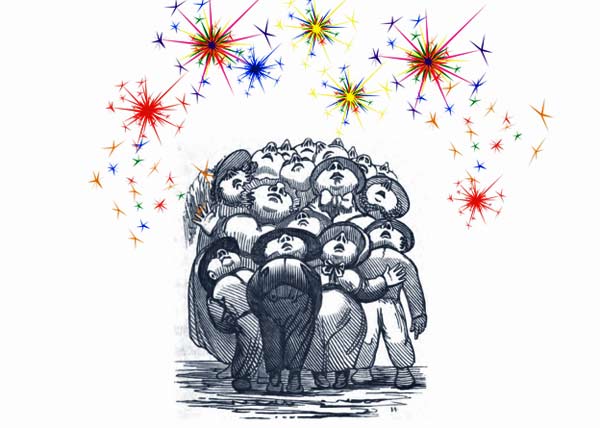
My candidate project concerns Fellow of the Royal Society (FRS) Benjamin Robins, who in 1748 made a general appeal to the public to observe and report the height of rockets – ultimately with military and surveying purposes in mind – during a firework display.
Without email, podcasts, or Dara Ó Briain’s Science Club, Robins’s request appeared as an anonymous bulletin in the November 1748 issue of The Gentleman’s Magazine1 (in his excellent Fireworks: Pyrotechnic Arts and Sciences in European History2, Simon Werrett suggests Robins is the most likely author)
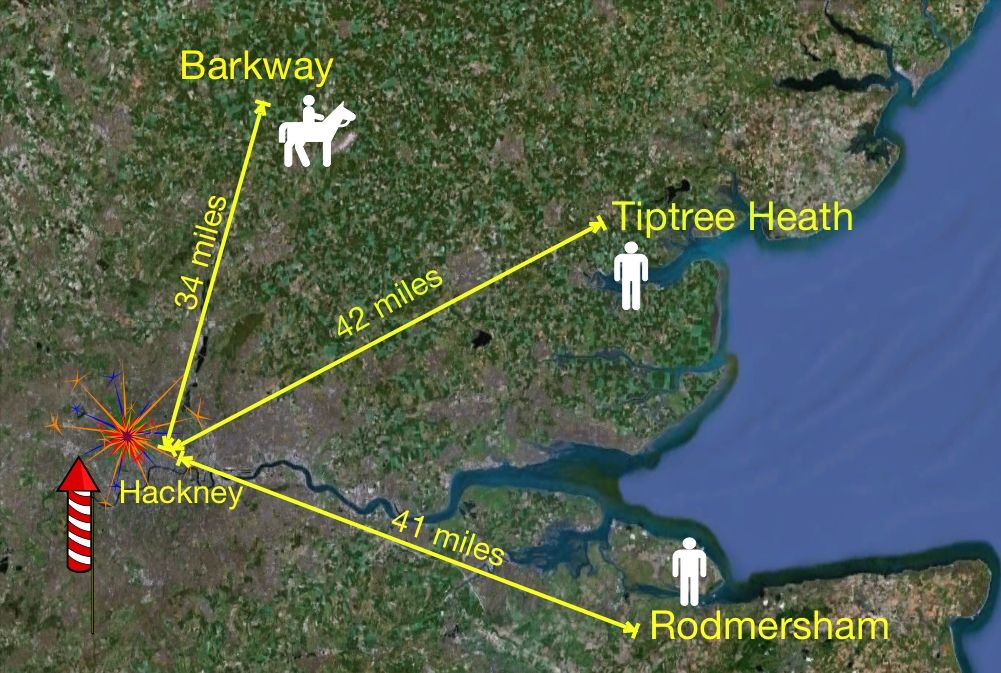
For if such as are curious and are from 15 to 50 miles distant from London, would carefully look out in all proper situations on the night when these fireworks are play’d off, we should then know the greatest distance to which rockets can possibly be seen; which if both the situation of the observer, and the evening be favourable, will not, I conceive, be less than 40 miles. And if ingenious gentlemen who are within 1,2 or 3 miles of the fireworks, would observe, as nicely as they can, the angle that the generality of the rockets shall make to the horizon, at their greatest height, this will determine the perpendicular ascent of those rockets to sufficient exactness.
The Gentleman’s Magazine1November 1748
Robins had made a name for himself in gunnery and ballistics, calculating for the first time how air resistance affects military projectiles3. Now he enthused over rockets for their
…very great use in geography, navigation, military affairs, and many other arts;1.
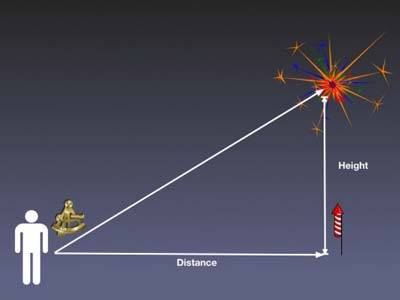
The light alone from a rocket was a useful signal in war; but Robins knew more was possible. Provided the rocket rises vertically to a known height, the observed angle between the horizon and the rocket at the top of its flight lets you calculate its distance. Before GPS and radio, this could tell you where someone was:
The map maker John Senex had already used the method for surveying4, but Robins needed more height and distance data to refine and calibrate the technique. But where would the rockets come from?
As it turned out, Robins’s timing was perfect. Bringing to an end a series of tortuous European wars, the recently signed Treaty of Aix-la-Chappelle was the latest cause for national, and therefore Royal, celebration. And George II planned to celebrate in style, with a sound and light spectacular involving the launch of thousands of firework rockets. The geo-politics of the day were about to lend Robins an unlikely and unwitting hand.
Held at Green Park, London, in April 1749, George’s display, famously accompanied by Handel’s Music for the Royal Fireworks, was huge. No less than 10650 rockets weighing up to 6 pounds each rose into the night sky from a 410 ft long ornate Doric temple or ‘firework machine’5 – 6000 of them reserved to go up together in the finale6.
Giovanni Niccolo Servandoni’s Firework Machine in Green Park 1749, V&A Museum no. 21228, reproduced under Creative Commons 3.0
Robins’ request for two types of data: angle measurements from those close in, and simple confirmations of visibility from those further out, came with instructions:
The observing the angle which a rocket, when highest, makes with the horizon, is not difficult. For if it be a star-light night, it is easy to mark the last position of the rocket among the stars: whence, if the time of the night be known, the altitude of the point of the heavens corresponding thereto, may be found on a celestial globe. Or if this method be thought too complex, the same thing may be done by keeping the eye at a fixed place, and then observing on the side of a distant building, some known mark, which the rocket appears to touch when highest; for the altitude of that mark may be examined next day by a quadrant; or, if a level line be carried from the place where the eye was fixed to the point perpendicularly under the mark, a triangle may be formed, whose base and perpendicular will be in the same proportion as the distance of the observer from the fireworks, is to the perpendicular ascent of the rocket.
The Gentleman’s Magazine1November 1748
Bearing in mind astronomy and triangulation are skills likely absent from most readers’ day jobs, this is quite an intimidating, albeit educational, set of instructions. So much for the procedure; how did the results pan out?
There were some issues on the night, including a large portion of the Doric temple unexpectedly catching fire during the show, and various eye witness accounts suggest the event was a little lack-lustre. But the rockets went up, and George’s spin-doctors took care of any negative PR.
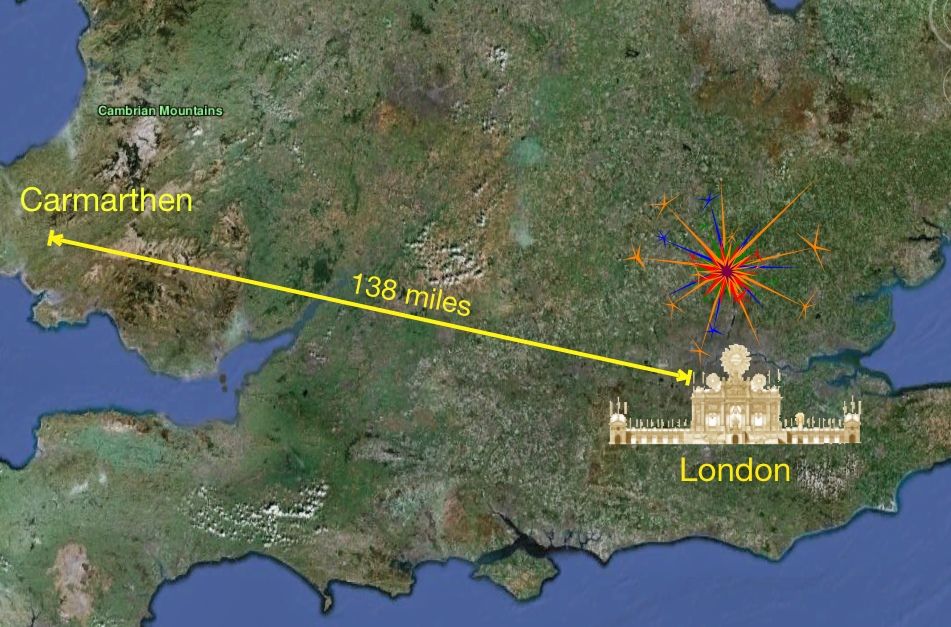
The response to Robins’ experiment was more disappointing, with only one report appearing in the follow up edition of the Gentleman’s Magazine, and that from a Welshman 138 miles away near Carmarthen:
I had a clear prospect of several miles eastward where I waited with impatience till near 10 o’clock, and then saw two flashes of light, one a few minutes after the other, that rose east of me to the height of about 15 degrees above the visible horizon. I don’t pretend that I saw any body of fire, only a blaze of light, which neither descended like a meteor, nor expanded itself abroad like a lightning, but ascended and died. Clouds interrupted, that I could see no more.
At this distance, a line-of-sight view of the rocket at the top of its trajectory is out of the question, thanks to the curvature of the Earth – never mind the Brecon Beacon mountain range. But we shouldn’t write Thomas off just yet. 6000 rockets going off together would make a hell of a flash, and we know lightning from thunderstorms can be seen from many miles away. And in the First World War there were reports of flashes from the fighting in France being visible from London.
In his full letter, Thomas logically argues why his observations could not have been meteors or lightning. Off the technical topic, he then questions the suitability and cost of the event, saying how he struggles to rationalise the irony of using fireworks to celebrate a military cessation. The moaning somehow makes his observations more credible.
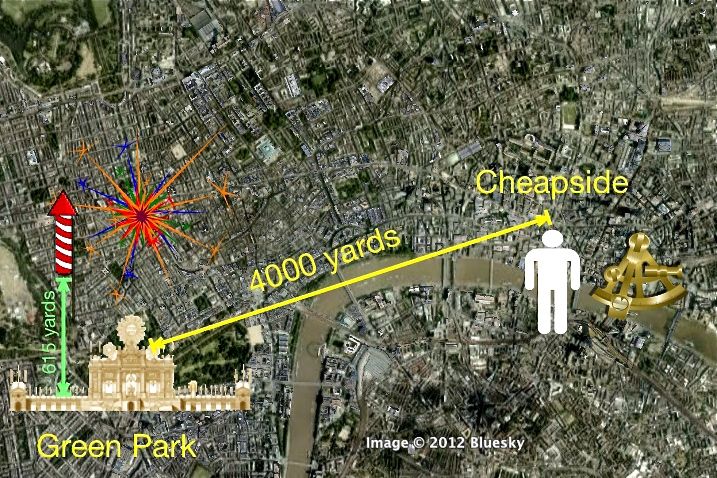
All the same, a single response with no elevation data must have been a disappointment to Robins. And just as well he’d taken the belt-and-braces precaution of making some of his own elevation measurements, with the help of a friend stationed 4000 yards away in Cheapside,
Observations from Cheapside
From these measurements, taken with a sextant with the starry background as reference, Robins was able to publish in the Philosophical Transactions of the Royal Society, that the highest Green Park rockets had risen to 8.75 degrees above the horizon, equivalent to a height of 615 yards8.
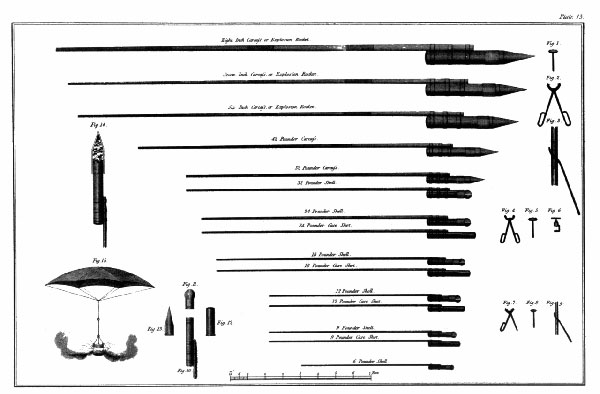
At six pounds, the Green Park display rockets were relatively small
Robins made further tests after the Green Park display, trusting to friends and colleagues placed at various locations tens of miles from London – itself a non-trivial task without mobile phones – and using rockets of more consistent specification9
Robins trusted to friends in further tests
We have to hand it to Robins, that despite a poor public response, his was a valiant effort to stir up interest and participation using the latest communications media available to him.
We should also remember The Gentleman’s Magazine was the first publication of its type (est. 1721) and the first to reach anything like a wide audience – albeit one excluding women and the not so well-to-do. The concept of a publicly visible two-way conversation via a publication was itself recent, having first appeared in pseudo form in the fictional dialogue between characters in the Spectator Magazine (1711-12). So maybe it was just all too new.
These days, I suppose Robins might suggest participants send him a geo-mapped digital photograph of the rockets. Some would understand what they were doing – others wouldn’t – but the data would still be good. But that brings us back to asking exactly who counts as a citizen scientist, which is a whole new question, and probably a good place to stop.
References and further reading
1. ‘A Geometrical Use proposed for ‘the Fire-Works’, Gentleman’s Magazine, Vol 18 Nov. 1748, p.488.
2. Fireworks: Pyrotechnic Arts and Sciences in European History. Simon Werrett, University of Chicago Press, 2010.
3. New Principles of Gunnery, Benjamin Robins, London, J.Nourse, 1742
5. A description of the machine for the fireworks; with all its ornaments, and a detail of the manner in which they are to be exhibited in St.James Park, Thursday, April 27th, 1749, on account of the General Peace, signed at Aix-la-Chappelle, October 7, 1748. Published by His Majesty’s Board of Ordnance. By Gaetano Ruggieri and Gioseppe Sarti.
6. The Mirror of Literature, Amusement and Instruction. Vol 32, 1838, p.66
7. Fireworks Observed. Gentleman’s Magazine, Vol 19, May 1749, pp.217-18
8. Observations on the Height to Which Rockets Ascend; By Mr. Benjamin Robins F. R. S. Phil. Trans. 1749 46 491-496 131-133; doi:10.1098/rstl.1749.0025
9. An Account of Some Experiments, Made by Benjamin Robins Esq; F. R. S. Mr. Samuel Da Costa, and Several Other Gentlemen, in Order to Discover the Height to Which Rockets May Be Made to Ascend, and to What Distance Their Light May be Seen; by Mr. John Ellicott F. R. S. Phil. Trans. 1749 46 491-496 578-584; doi:10.1098/rstl.1749.0109
Modern revolvers have a mechanism that keeps them from firing accidentally if knocked or dropped. Before that, savvy owners learned to carry their weapon with an empty chamber under the hammer. Californian real-estate developer Clarence Austin was not among them.
Picture Austin, one May day in 1909, setting off on a peaceful fishing trip. He parks up his vehicle, ready to meet a connecting streetcar. Running late, he hurriedly unloads his gear, casually throwing a blanket roll to the sidewalk. As the roll strikes the ground, a forgotten pistol consealed in its folds discharges. The bullet rips through Austin’s knee, and lodges, somewhere, in his leg.
“I am shot!” Austin perceptively exclaims – according to the Los Angeles Herald1.
Bystanders rally and Austin is ambulanced home. A doctor arrives, and, with a strange electrical apparatus that emits invisible rays, locates and removes the offending slug. Austin Clarence will live to sell real-estate another day.
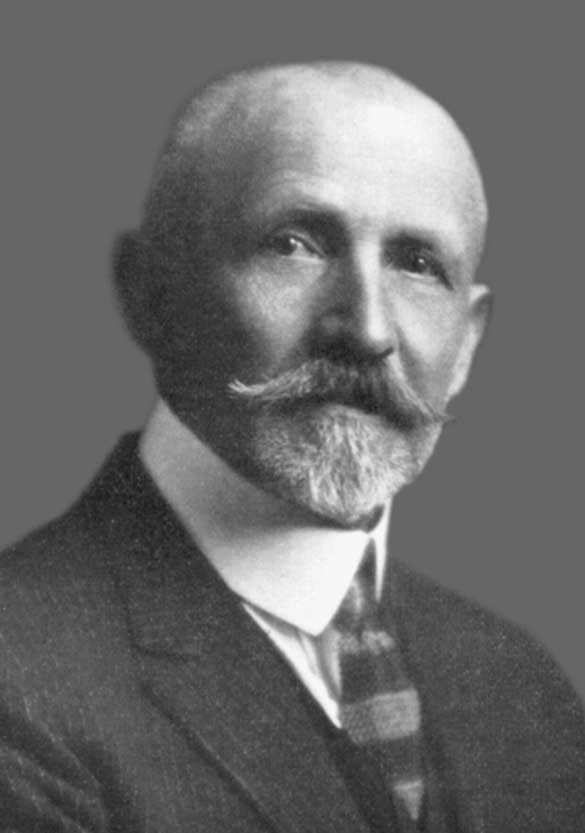
As luck would have it, Austin had picked the best possible neighbourhood west of the Rockies to shoot himself in – for his attending physician was Dr Adalbert Fenyes (1863-1937): M.D., neurologist, celebrated entomologist, all-round gentleman scientist, and – importantly for Austin – one of the very few early practitioners in medicinal X-rays. Fenyes lived in a city 10 miles northeast of Los Angeles, a place that Einstein once compared to nothing less than paradise: Pasadena.
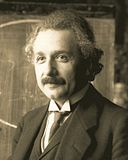
Here in Pasadena it is like Paradise. Always sunshine and clear air, gardens with palms and pepper trees and friendly people who smile at one and ask for autographs.
Albert Einstein, 19312
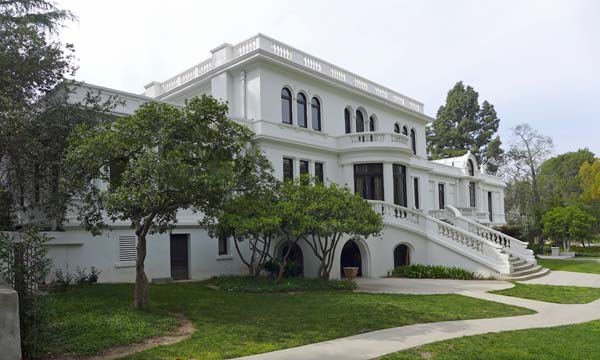
I discovered Fenyes on a recent visit to the Pasadena Museum of History. Custodians of the Fenyes legacy, the museum is situated at the site of the former Fenyes Mansion at 170 North Orange Grove (now 470 West Walnut Street).
Adalbert Fenyes (Am.Mus.Nat.Hist)
While not quite an A-Lister in the Einstein league, Adalbert, taken together with his accomplished artist and businesswoman wife Eva, give us a fascinating glimpse on a bygone age: a lost vignette of turn-of-the-century intellectual life in a city whose attraction for talented people, and especially scientists, persists. Fenyes also opens the door on two other Pasadena scientists I particularly admire: the astronomers George Ellery Hale, and Edwin Hubble: who, like the Fenyes’s, supported their city as well as their science.
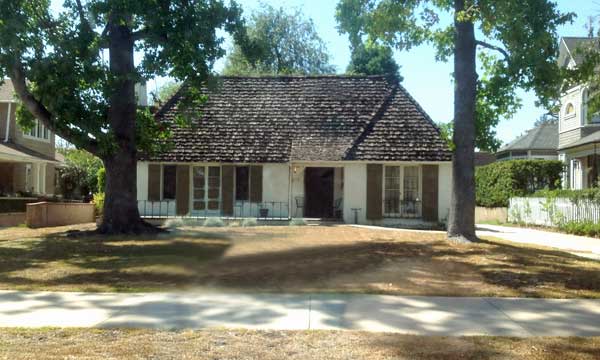
Even the most conscientious scientists have to leave their laboratories and observatories sometime, and visiting their former homes and neighbourhoods – often remarkebly unchanged – helps fill that last 5% the biographies seem to miss. The Fenyes mansion is a case in point. You might recognise it from any number of Hollywood movies – most recently The Prestige: part of a tradition started with Eva Fenyes’s close association with the movie industry3. So too the bungalow at 707 South Oakland Avenue, where Albert and Elsa Einstein stayed when Albert visited Caltech in the 1930s.
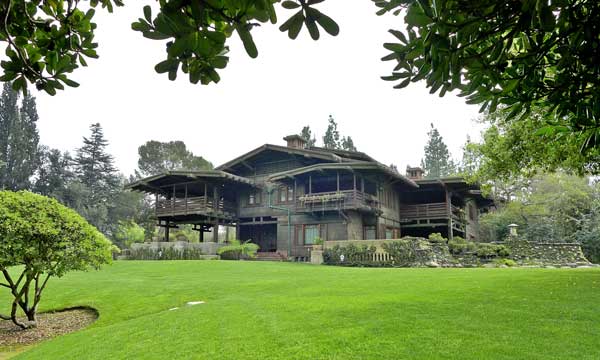
Orange Grove Avenue has always been popular with the well to do, and not just film-stars; just down the road is the iconic Arts & Crafts Gamble House, once owned by David Gamble of Proctor and Gamble fame. Hale and Hubble also left their mark – as we shall see. But first up, what of Adalbert Fenyes….?
There are no direct British parallels to Fenyes – aristocrat son of a Hungarian Count, but he may be close to a Charles Darwin or John William Strutt – Baron Rayleigh (of Argon discovery and Rayleigh Scattering fame): gentlemen scientists with broad interests and the independent means to work to their own agendas.
Fenyes trained as a physician in Austria, and was doctoring in Egypt when he met American heiress Eva Scott Muse – while on her Grand Tour .
After a spell in Chicago, where Adelbert studied X-ray procedures, in 1896 the couple settled in Pasadena, moving to the new $20,000 mansion in 1907.
Multi-faceted Fenyes M.D. ran a physician’s office downtown – specialising in neurological problems – while Fenyes the entomologist wrote scholarly papers, built an insectorium in the mansion grounds, and travelled to collect specimens4 ; a two month trip to Mexico yielded no less than 10,000 beetles5. Fenyes’s beetle collection is now with the California Academy of Sciences in San Francisco.
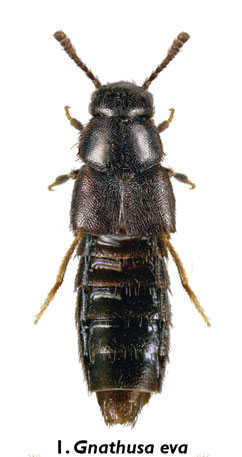
Fenyes discovered several new genera and species within the order Coleoptera (beetles). Always the gentleman, here is one he named after his wife:
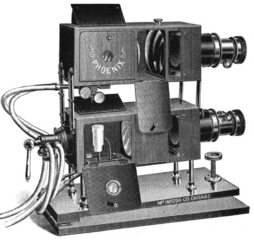
While Adalbert’s insect research appeared in learned journals, the bug-hunting trips became the stuff of society page gossip, alongside the movements of movie stars and business tycoons. Fenyes repaid the attention, albeit to the favoured few, with popular lantern slide talks on his beetle research – including samples – to Pasadena’s exclusive Twilight Club (all male) and Shakespeare Club (all female). The civicly framed “Insects and Their Value to the Community”(1904) 6 betrays Fenyes’ skill as a science communicator, tuning into his business-minded audience. Even insects had to pull their weight in those industrious times.
Before Powerpoint: the stereopticon
Röntgen Rays
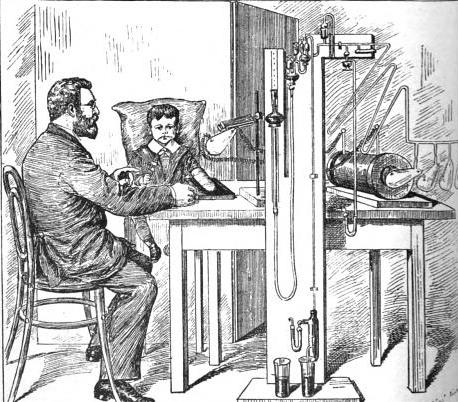
Within a year of Wilhelm Röntgen’s 1895 discovery of X-rays, and Michael Pupin’s method of imaging developed the following year, medical applications started to appear. Fittingly for our story, one of Pupin’s early exposures, or skiagraphs, shows a hand riddled with self-inflicted buckshot7. In the case of Clarence Austin’s leg, Fenyes was able to see the location and orientation of the bullet, and identify cloth fragments carried into the wound. By replacing the photographic plate with a fluorescent screen it was possible to operate ‘live’, the surgeon’s skeletised hands and instruments visible hovering over the patient’s wound (Gillanders8 ). Portable equipment run off car batteries was in use by 18999.
Early clinical application of X-Rays (from The New Photograph10, 1896 )
A prominent researcher in the field, Fenyes led a session on ‘X-ray therapy’ at a 1903 meeting11 of the Southern California Electro-Medical Society in Los Angeles, alongside sessions on ‘Galvanism’ and ‘Static Therapy’. Fenyes studied the effects of X-rays on the kidneys and other organs, and for the treatment of non-malignant skin disease like acne and eczema 12 , personally escaping the worst of the radiation burns and illness that seriously injured or killed many contemporary practitioners. When he moved to Pasadena, he had one of the rare X-ray machines shipped to his home – possibly the equipment used on Austin.
If Pasadena had any single founder, it was George Ellery Hale
Kevin Starr in his history of California13.
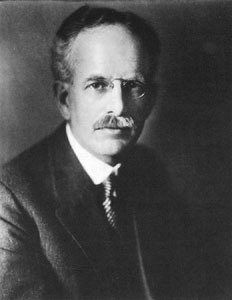
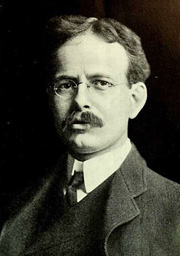
Our next urbane utopian is Chicago born George Ellery Hale (1868-1938): best known – at least among astronomers – as the instigator, designer, and builder of the world’s greatest astronomical observatories and telescopes.
Inspired by his first sight of the Lick Observatory as a young man on his California honeymoon, Hale ‘made-it-so’ for the 40-inch Yerkes refractor in Wisconsin, the 60-inch and 100-inch reflecting telescopes on Mount Wilson, and the 200-inch ‘Hale’ reflector on Mount Palomar.
Possessed since childhood of a high-energy passion and interest in all things, Hale explored, studied, experimented, and built machines in his laboratory workshop: basically doing all the fun stuff kids are arguably over-protected from today (anyone whose father bought them a steam-driven lathe for Christmas, as Hale’s did, is bound to turn out right in my book).
As the calendar flipped into the twentieth century, 32 year old Hale, already an established solar astronomer with the invention of the spectroheliograph under his belt, was keen to progress research on stellar evolution started at the Yerkes Obervatory. Hale had in mind a series of newer, bigger, and more capable solar instruments, the siting of which, in terms of atmospheric conditions, would be critical. In 1903, his global scouting mission reached Pasadena.
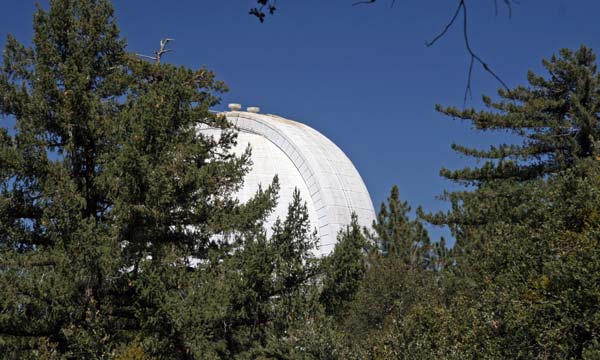
At first, the test observations looked hopeless. From ground level, a shimmering heat from the baking dessert distorted the Sun’s image. But tests at the top of Mount Wilson, a 5700 foot peak in the San Gabriel Mountains overlooking the city, told a different story. Here, where extensive tree cover insulated the ground and muffled the disabling thermals, conditions were perfect. Mount Wilson commanded a World Class view of our nearest star14.
And so the love affair with Pasadena began, when in 1904 Hale took up the directorship of the Mount Wilson Solar Observatory. Dull, wintery, climates depressed Hale; Southern California would do just fine.
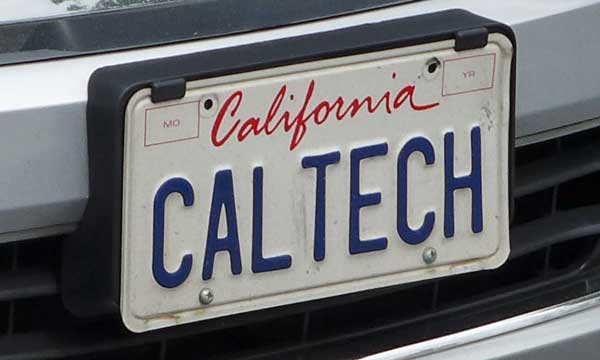
Hale’s contribution to astronomy is well known. Less well known, even I suspect among some Pasadenans – is that the city’s California Institute of Technology (Caltech), Huntington Library, Civic Center, and a host of other organisations, institutes, and clubs, only exist because of Hale’s energy and commitment.
No one could be associated with Hale without falling at once under the charm of his vivid and inspiring personality
Walter S Adams, Biographical Memoir15, 1939
In 1907, Hale bought the ‘Hermosa Vista’ on Bellafontaine Street in South Pasadena, formally the city’s first hotel and post office, which he owned until 1936. He equipped the house with an 8.5-inch telescope through which he watched the observatory being built (Starr12 page 75)(South Pasadena Public Library)
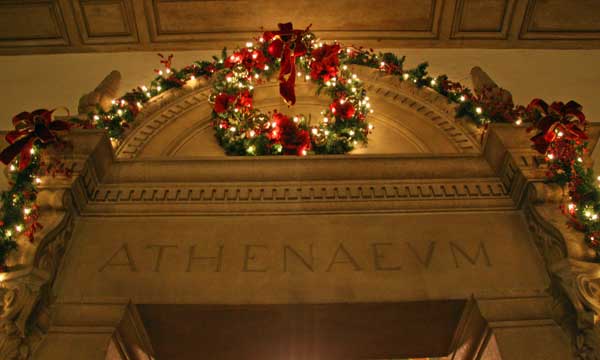
Comfortable in the intellectual gentility of Pasadena society, Hale immediately slipped into a circle of friendship, influence and wealth where he would progressively share his vision of Pasadena as nothing less than a ‘New Athens’ of the West. His influence on millionaire industrialist Andrew Carnegie had secured Mount Wilson, but there were always new telescopes to be built. Hale kept potential sponsors and the general public informed of his work through a series of popular talks, including – one year into the project – an upate to the good ladies of the Shakespeare Club:
Prof. George K. Hale, the famous director of the Mount Wilson solar observatory, left a driving snowstorm this evening at the observatory and came down to Pasadena to give his first lecture in this city. It was at the instance of the Shakespeare Club, and the beautiful auditorium of the clubhouse was crowded for the welcome occasion. Prof. Hale spoke in an informal manner of the building of the observatory, the difficulty of transporting the instruments and material and of the non-technical progress of the work of investigation….
In his recent photographs of the milky way from the top of Mount Wilson, Prof. Hale remarked that the wonderful photographs indicated in a very definite way the remarkable transparency of the atmosphere in the vicinity of the observatory.
Los Angeles Herald, 190516
The Los Angeles Herald has it slightly wrong here, as Hale’s first Pasadena outing was a year earlier on 28 January 1904, with a talk on ‘The Evolution of the Stars’ to the Throop Institute17: the educational facility Hale would gradually transform and in 1920 see formally renamed as the California Institute of Technology (Caltech). Hale also gave popular talks to the Friday Morning Club in Los Angeles and most likely, the Twilight and Valley Hunt Clubs of Pasadena where he was a member.
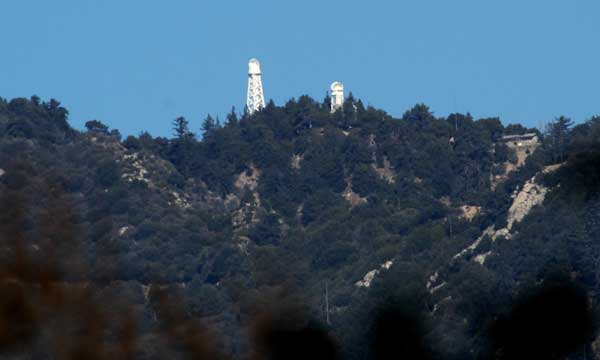
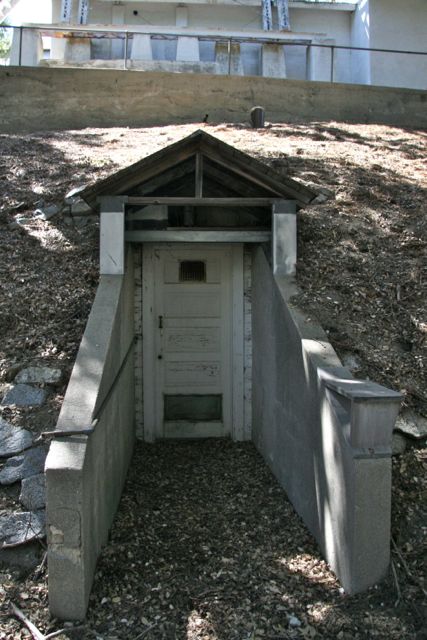
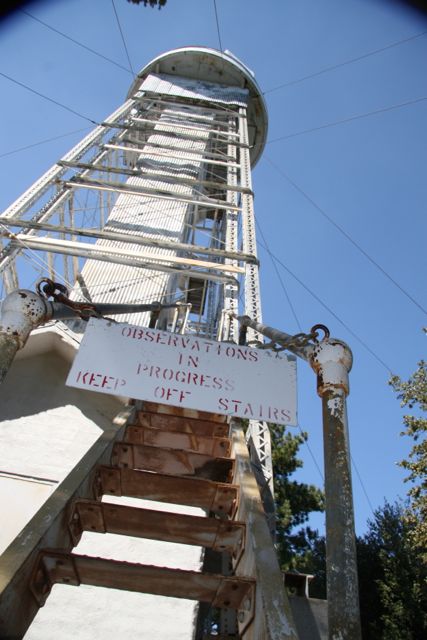
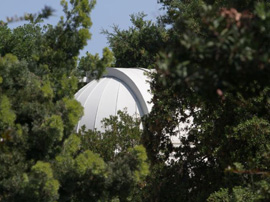
Four years later in 1909 and things have moved on a bit. Adalbert Fenyes, on his way home from an X-ray session with a certain Clarence Austin, looks up (we suppose) and sees a shiny white tower on the mountain crest: shiny, because the paint on Hale’s new 60-foot solar telescope tower – completed in the Fall of 1908 – is barely dry.
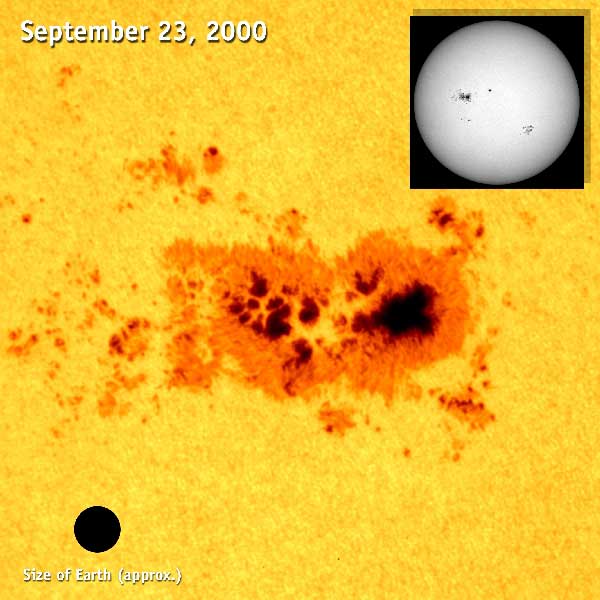
The ‘Snow’ horizontal solar telescope, borrowed from Yerkes, was already at the site; but this new instrument made possible Hale’s most important discovery: that the sun has magnetic fields18 and their association with sunspots. For a description of how he did it, see here (USC history page).
Hale discovered the Sun’s magnetic field, and its association with sunspots. SOHO (ESA & NASA)
Both the 60-foot, and a 150-foot instrument from 1912 are still used for research today.
Solar telescopes follow the Sun with a moving plane mirror, or coelostat, often mounted at the top of a tower. The light is directed through a stationary lens to a focus below ground, where, because it’s not being slewed around on the end of a long tube, all manner of equipment can be assembled, including Hale’s spectroheliograph to analyse the Sun’s image at specific wavelengths of light. At Mount Wilson, Hale took these ideas to new extremes of scale and sophistication.
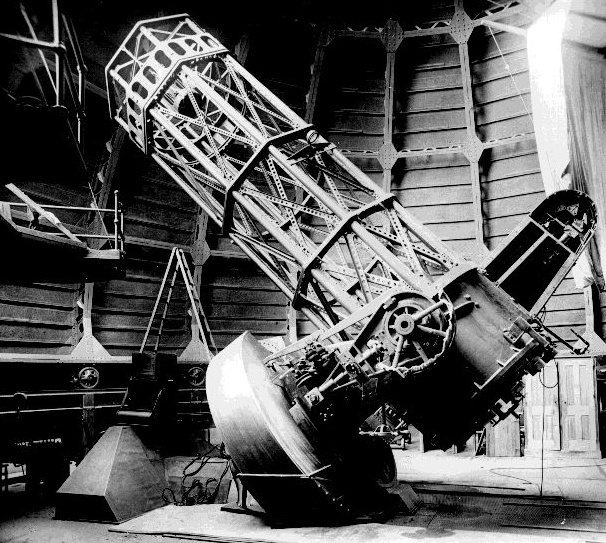
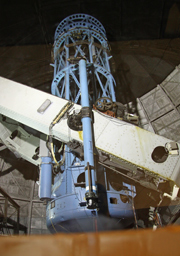
All in all, 1908 was a busy year. The solar tower was completed, but so too was the even more ambitious 60-inch reflecting telescope – easily the world’s largest, and this time for night-time use. Bearing in mind the Sun appears 400,000 times brighter than the Moon, and 13 billion times brighter than the next brightest star, Sirius, you need a much larger lens or mirror at night to collect enough scarce photons to make objects visible. Hale trudged his heavy 60-inch diameter glass mirror, and a 150 tons of supporting telescope steelwork, up Mount Wilson by mule train and a primitive mountain truck.
60-inch (1908) reflector on Mount Wilson. Credit: Caltech Astronomy.
The lead up to the delicate mirror’s installation on 7th December 1908 must have been a particularly stressful time for Hale, and may go some way to explain why on the 19th November he got arrested following a high-speed motorbike chase with the Pasadena Police Department19,20: an offense that cost him $10. (1908 was also a bad year for the “nervous attacks” Hale suffered from for much of his life25.) But it was all worth it, and on the night of 20th December Hale was rewarded with an early Christmas present: the best naked-eye view of the Orion Nebula anyone had seen up to that point.
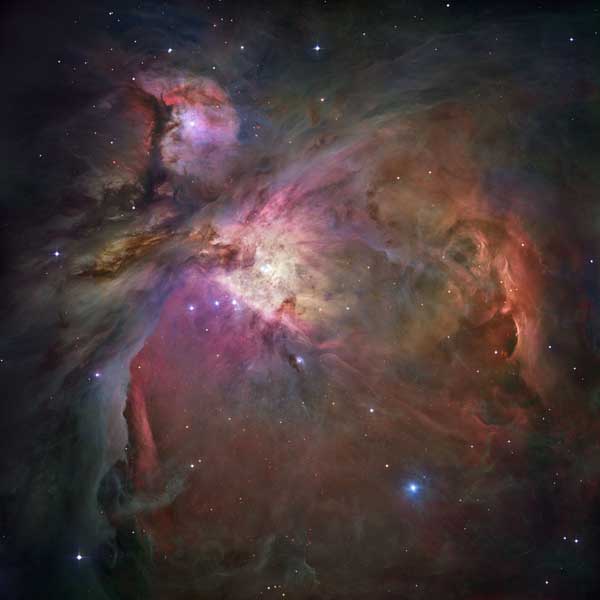
One of the first objects Hale observed with the 60-inch reflector: The Orion Nebula M42 (Hubble Telescope picture, Credit: NASA, ESA, M. Robberto (STScI/ESA) et al.
When Colonel Griffith J Griffith visited Mount Wilson in 1908, and looked through the new 60-inch, the views inspired him to fund the Griffith Observatory in Los Angeles’s Griffith Park, proclaiming:
If all mankind could look through that telescope it would change the world!
Today, visitors can look through a 12-inch refractor telescope at Griffith for free, or hire the 60-inch on Mount Wilson at $900 for a half-night or $1700 for the whole night.
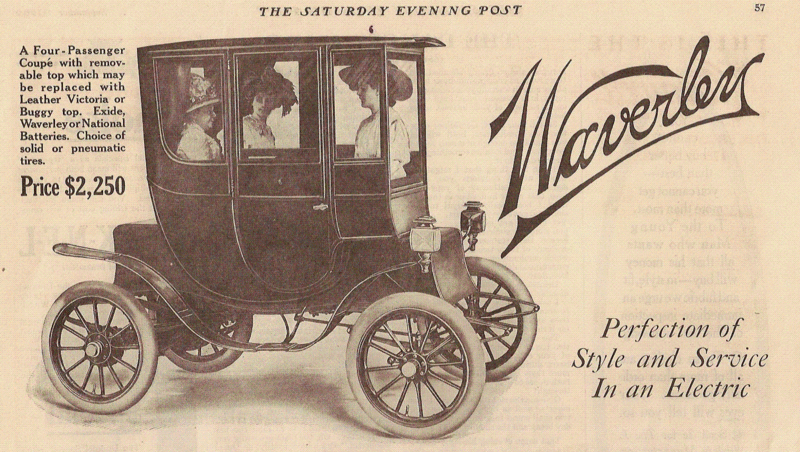
1910 Waverley Coupe. The sort of thing Hale was up against.
1908 was a challenging year for Hale in the roadcraft department. As well as the high speed run in with police in November, he had already suffered a collision with a motor vehicle in March that year: in which he “made a flying leap and landed safely in the road. The front part of his motorcycle was ground to pieces under the wheels of the car.”21
Private road vehicles were popular, available, and accessible to monied Pasadenans. Electric vehicles were favoured by ladies en route to the opera, keen to avoid soiling their gowns with horse muck or the oil and swarf of the internal combustion engine. Eva Fenyes drove one: on one occasion mounting the pavement and virtually inverting the car through a plate glass window22.
The big telescopes aside, I particularly like Hale’s attitude to: (a) investment in science, and (b) the amateur’s role in science. His approach to investment, not just in money, but in time and recognising the need for a long view, is still relevant in the age of the Large Hadron Collider (LHC), and, indeed, super-telescopes. His enthusiastic support for amateurs resonates with the burgeoning trend for so-called Citizen Science. Writing in 1905, with the challenge of equipping Mount Wilson ahead of him, Hale is uncompromising on what it takes to make progress in scientific research:
A man of science must so direct his efforts as to secure the largest results not within a single month or a single year, but within the entire period of his activities. He can thus afford to devote much time and effort to details of construction, if these promise sufficient advantage in the end. He must work years, if need be, to secure such means of investigation as appear to him needful.
The Development of a New Observatory, Publications of the Astronomical Society of the Pacific23, Vol. 17, No. 101, April 10, 1905
Also ahead of the curve on pan-disciplinary working and information exchange – something we struggle with today – Hale often highlighted in his talks the mutual benefits enjoyed when astronomy works closely with physics and chemistry: for example, the spectroscope for determining chemistry in the Sun and distant stars. Hale is popularly known as the father of astrophysics because of the close links he fostered between the disciplines of physics and astronomy.
Hale’s equally unrestrained enthusiasm for amateur science positively bubbles over in his essay Work for the Amateur Astronomer24, where he recalls his own evolution from schoolboy experimenter roots:
But neither in limited or unlimited resources nor in association with public or private laboratory do we find the criterion that marks the amateur. Nor is he to be mistaken for the dilettante of the popular imagination. The amateur is in fact a true lover of knowledge for its own sake, one who works because he cannot help it, swept on by a passion for research which he attempts neither to explain nor to curb, an enthusiasm which carries him over obstacles too high to be surmounted by the perfunctory student or the man without zeal. To the sane enthusiast, whether his talents be large or small, great advances are possible. An impelling interest, even if backed by only a very slender stock of knowledge, may accomplish more than all the learning of the schools...
The passion for research springs early, and the boy of twelve may already feel within him the desire to add to the world’s knowledge. He consults his books, and is fascinated by the experiments they outline. Who can forget his thrill of excitement when the bubbles of oxygen, issuing from the heated retort, rose one by one thru the water-filled bottle, inverted over its tank! The delicious possibility of an explosion (realized all too often with prematurely ignited jets of hydrogen!) and the proud consciousness of actually venturing into the field of the original investigator, are experiences to be felt but not described. Then there was the winding of the first induction coil, the anxious test of the length of its spark, and the dim realization that here was an instrument of research applicable in many fields…
“In recent years, as I have pushed with larger and larger telescopes into the depths of space, I have often been forced to confess that the astronomer never beholds sights more wonderful than those which a drop of ditch-water, on the stage of the cheapest microscope, will afford to any boy.
WORK FOR THE AMATEUR ASTRONOMER, 191624
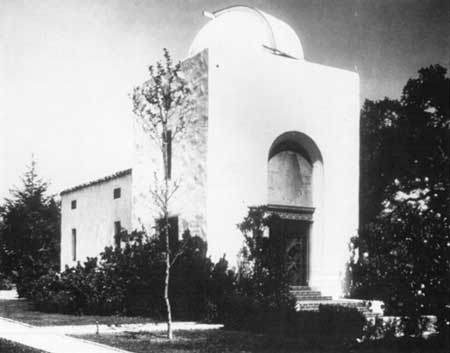
All good things, and people, come to an end. His mother feared he would burn out early, but in the event Hale put in a very respectable innings before his health, and his psychological demons, caught up with him. Hale suffered a serious nervous breakdown25 in 1921, which led to a wind-down and eventual full resignation from the Mount Wilson directorship. When Hale started out in astronomy, his ever-encouraging father built him an observatory equipped with a 12-inch refractor. Now, in his retirement, he commissioned his own solar observatory for private research – in Pasadena of course.
Hale Solar Laboratory in 1931. Credit: National Parks Service. Picture Christine Shirley.
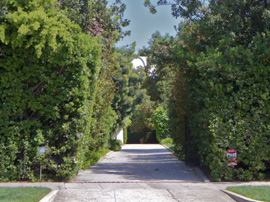
I drove down Holloway Road to check the site out, but the observatory building on this quiet residential street is not accessible. Looking beyond the ‘armed response’ signs that depressingly clutter many of the driveways round here, the dome at least is still visible. It all looks a bit incongruous – but appealingly eerie. (More on the observatory here at Palomar Skies blog.)
Unlike the solar telescopes, the 100-inch was a laviathan of the night, with two and a half times the light gathering power of the 60-inch reflector Hale installed in 1908. It would remain the world’s largest telescope until Hale outdid himself one final time with a 200-inch instrument on Mount Palomar (operational in 1948, he never saw it completed). And the arrival of the 100-inch, as one element of a perfect storm of capability, knowledge, and inspiration that was about to redefine our concept of the universe, is the perfect cue for our last résident duparadis : Edwin Powell Hubble.
Receding Horizons
Thanks to Carl Sagan, Neil deGrasse Tyson and Brian Cox, it’s no great mystery to most of us that we live on a planet, near a star, in one of many galaxies that make up the expanding universe.
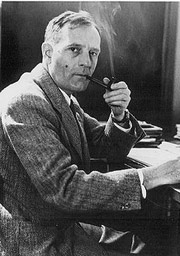
Edwin Hubble
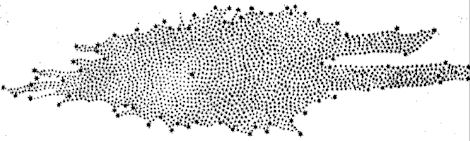
But in 1919, when 30 year old Edwin Powell Hubble (1889-1953) returned from the First World War to work for George Hale at Mount Wilson, that was not the case. William Herschel, as early as 1785, estimated the shape of the galaxy by counting the number of stars he could see in different directions. But he had no idea about size, and assumed the fuzzy patches between the stars – he called them nebulae – were all contained inside the one collection. Hubble was not the first to question this picture of the universe. Dark lanes in the spiral shaped Andromeda nebula looked something like the dark lanes in our own Milky Way: so were we looking at something like a copy of ourselves? And the red-shifted spectra of some nebula suggested they might be separate entities. But solid evidence was lacking, and it would take Hale’s 100-inch telescope, recent discoveries about variable stars, and Hubble’s conviction and skill – a perfect storm – to prove we are part of something much larger.
Herschel estimated the shape of our galaxy in 1785 (Wikicommons)
Using the 100-inch telescope, Hubble could for the first time resolve individual stars in the Andromeda and other nebulae. And by measuring the brightness and periodicity of Cepheid Variables – special ‘standard candle’ stars whose absolute brightness and periodicity Henrietta Leavitt had in 1908 showed to be related, he could calculate the distance of both the stars and their containing nebula.
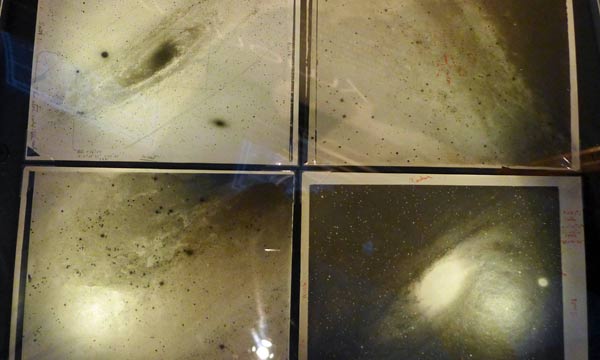
In 1923, Hubble did exactly that for Cepheid variable Hubble V1 in Andromed. In a delicious example of restrained scientific under-statement, the magic distance number: 285,000 parsecs, or 929,100 light years, appears almost lost in the text of Hubble’s 1925 address to the American Astronomical Association26 (reminiscent of Crick and Watson’s first paper on DNA in its down-play of implications). Our galaxy is 100,000 light years across, so Hubble had, figuratively, expanded our universe by a factor of ten – and that based on Andromeda, which, cosmically speaking, is virtually on top of us. We now think the universe is 150 billion light years across. Hubble went on to measure the red shifts of many different galaxies, which showed these ‘island universes’ to be moving away from each other at a rate proportional to their distance. Not only was the universe larger than we ever imagined – it was expanding too. Hubble’s photographs of Andromeda, with the Cepheids he measured marked in his own hand, are on display in the Huntington Library.
Hubble’s 100-inch telescope photos of Andromeda (Photo: Tim Jones. Exhibit at Huntington Library)
Hubble’s announcement may have set the scholarly hearts of American Astronomical Association members racing, leaving the popular scientific press of the day to translate for the rest of us – as in Science News-Letter‘s enthusiastic headline27:
Sky Pinwheels Are Stellar Universes 6,000,000,000,000,000,000 Miles Away
The Science News-Letter, Dec. 1924
I make it 5.5 x 10¹⁸ miles, but close enough. Of Hubble’s observations of a 700,000 light year distant cluster in Sagitarius, the Daily Princetonian28 declared:
Another Universe Exists Beyond Telescope Reach
Daily Princetonian, January 1926
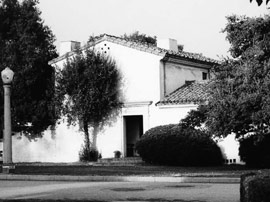
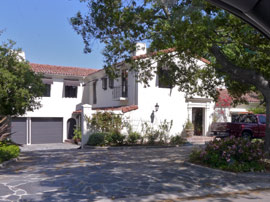
Again, not entirely accurate, but I guess people got the idea. I dutifully drove past Hubble’s house on Woodstock Road, San Marino, where he lived from 1925 till his death in 1953. Designed by Joseph Kucera in 1925, it is the only National Historic Landmark in Pasadena’s neighbour city. It’s also situated in a very nice spot – handy for the Huntington Library, and looks very little changed from earlier photographs. (And today well out of the reach of all but the wealthiest early-career scientists.)
I guess out of the three: Fenyes, Hale, and Hubble – Hubble’s ghost has had the best popular run, mostly down to the space telescope named after him.
But Hubble’s original work, that literally expanded our horizons a billion-fold, is not forgotten, and in 2010 was specially honoured when the telescope bearing his name was turned to once more monitor the brightness of Hubble variable V1 in Andromeda. When the data were analysed, the period of variability derived from the modern measurements was found to be in agreement with the historical values. Or to put it another way, while you are more likely to be run down by a Tesla than a Waverley today, the light curve, like much of Pasadena, has barely changed.
References
1. Real Estate Dealer Accidentally Hurt. Los Angeles Herald, May 7, 1909
4. Fenyes Colioptera (beetle) collection is kept at the California Academy of Sciences Entomology Collection Highlights
5. Los Angeles Herald, Volume 35, Number 266, 24 June 1908
6. Twilighters in Session. Los Angeles Herald, Volume XXXI, Number 183, 30 March 1904
7. Pupin’s slide is on display at the Huntington Library, San Marino
8. The Roentgen Rays In Bullet Extraction. I. L. G. Gillanders, British Medical Journal, Vol.1, No 1950 (May 14, 1898), p.1252-1253
9. Portable X-ray powered from car. Los Angeles Herald, Volume 601, Number 185, 3 April 1899
10. The New Photography. Arthur B. Chatwood, Pub. Downey & Co. 1896
11.’Electricity in Medicine – Southern California Society Will Meet This Afternoon’. Los Angeles Herald, Volume 30, Number 239, 2 June 1903
12. Southern California Practitioner, Vol 18. 1903 P541
13. The Dream Endures: California Enters the 1940s. Kevin Starr, Oxford University Press, 1997.
14. May Locate Giant Telescope on Summit of Mount Wilson. Los Angeles Herald, Volume 31, Number 115, 22 January, 1904.
15. Biographical Memoir of George Ellery Hale, by Walter S Adams, National Academy of Sciences Biographical Memoirs, Vol.21, fifth memoir.
16. Important Work at Observatory. Prof. Hale Shows Progress of Investigation. Los Angeles Herald, Volume 33, Number 51, 21 November 1905
17. Illustrated Lecture at Throop. Los Angeles Herald, Volume XXXI, Number 122, 29 January 1904
18. On the Probable Existence of a Magnetic Field in Sun-Spots. Hale, G. E., Astrophysical Journal, vol. 28, p.315, 1908ApJ….28..315H
19. Hale Arrested for Speeding. Los Angeles Herald, Volume 36, Number 50,
20 November 1908 20. Hale Pays FineLos Angeles Herald, Volume 36, Number 54, 24 November 1908
21. Dr Hale Injured by Fall From Motorcycle. Los Angeles Herald, Volume 35, Number 172, 22 March 1908
22. Car Crash. Los Angeles Herald, Volume 33, Number 112, 21 January 1906
23. The Development of a New Observatory, Publications of the Astronomical Society of the Pacific, Vol. 17, No. 101, April 10, 1905
24. WORK FOR THE AMATEUR ASTRONOMER, George Ellery Hale, Publications of the Astronomical Society of the Pacific, Vol. 28, No. 163 (April, 1916),pp. 53-61 Pub. The University of Chicago Press.
25. Hale’s “Little Elf”: The Mental Breakdowns of George Ellery Hale. Sheehan, William; Osterbrock, Donald E., Journal for the History of Astronomy, 05/2000, .93
26. Hubble, Edwin P., “Cepheids in Spiral Nebulae,” Pubs. Amer. Astr. Soc.5, 261-64 (1925); reprinted in Observatory48, 139-42 (1925).
27. ‘Sky Pinwheels Are Stellar Universes 6,000,000,000,000,000,000 Miles Away’, The Science News-Letter, Vol.5. No.191, Dec 6, 1924, pp.2-3. Pub. Society for Science and the Public.
28. Daily Princetonian, Volume 46, Number 170, 25 January 1926
Location Map
View Pasadena Science in a larger map Further Reading Includes examples of Eva Fenyes painting, article in Hometown Pasadena Journey to Palomar video: Includes background on Hale, more on the 200-inch Palomar telescope, and a look to the future and the planned 30 metre telescope.
This website uses cookies to improve your experience while you navigate through the website. Out of these, the cookies that are categorized as necessary are stored on your browser as they are essential for the working of basic functionalities of the website. We also use third-party cookies that help us analyze and understand how you use this website. These cookies will be stored in your browser only with your consent. You also have the option to opt-out of these cookies. But opting out of some of these cookies may affect your browsing experience.
Necessary cookies are absolutely essential for the website to function properly. This category only includes cookies that ensures basic functionalities and security features of the website. These cookies do not store any personal information.
Any cookies that may not be particularly necessary for the website to function and is used specifically to collect user personal data via analytics, ads, other embedded contents are termed as non-necessary cookies. It is mandatory to procure user consent prior to running these cookies on your website.